
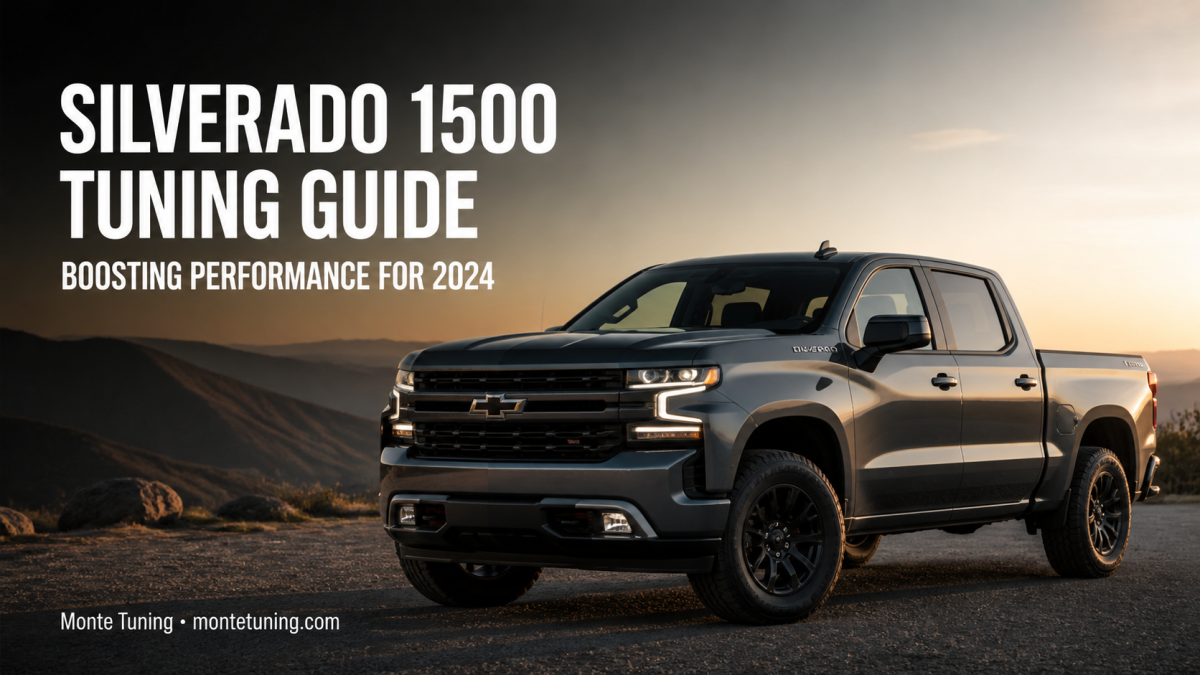
Chevrolet Silverado 1500 tuning for 2024 involves using OBD2 plug-and-play devices to optimize engine parameters like air-fuel ratios and throttle mapping. This approach enhances horsepower, torque, and fuel efficiency by communicating through the vehicle’s CAN bus, offering a reversible performance upgrade without needing to modify the factory ECU.
Driving a modern truck like the 2024 Chevrolet Silverado 1500 often feels like a trade-off. You have incredible utility and towing capability, yet the factory calibration is frequently set to prioritize extreme emissions compliance and conservative fuel mapping. Many owners experience what is commonly referred to as the dead pedal—a noticeable hesitation between pressing the accelerator and the truck actually responding.
This lag isn’t a mechanical fault; it is a software choice made by the manufacturer. For those who use their vehicle for daily commuting or heavy hauling, this lack of immediacy can be frustrating. Modern tuning, particularly through OBD2-based solutions, seeks to reclaim that responsiveness by refining how the engine management system interprets your input.
Understanding Modern ECU Architecture
The 2024 Silverado 1500 utilizes GM’s Global B electrical architecture. This system is heavily encrypted, which makes traditional flash tuning—where the engine control unit is physically removed and rewritten—both expensive and potentially risky for your powertrain warranty. Because the factory software is locked, many enthusiasts are moving toward OBD2 modules.
An Monte GT or Monte GTR device operates by intercepting signals from the engine sensors. Instead of overwriting the ECU, these modules process data in real-time, allowing the engine to operate more efficiently within its safe design parameters. This method is popular because it leaves no permanent footprint in the ECU’s memory, making it easy to return to stock settings before dealership visits.
Every vehicle and engine configuration responds differently to OBD2 tuning. Before purchasing, it’s worth checking compatibility with your specific make, model, year, and engine — and reviewing the setup guide for your device.
Performance Gains by Engine Type
The real-world benefits of tuning vary significantly depending on which engine your Silverado is equipped with. Forced-induction engines generally show the most pronounced improvements.
- 2.7L TurboMax (L3B): By optimizing boost pressure and throttle mapping, many drivers find a sharper power delivery that makes the truck feel lighter and more agile.
- 3.0L Duramax Turbo-Diesel (LZ0): This engine benefits significantly from refined injection timing. It often results in smoother low-end torque, which helps the 10-speed transmission stay in a higher gear longer, improving both pulling power and overall efficiency.
- 5.3L & 6.2L EcoTec3 V8s: Naturally aspirated V8 models see the most improvement in throttle sensitivity and gear shift quality, providing a more direct connection between the pedal and the powertrain.
It is important to manage expectations. While enthusiasts often look for peak horsepower numbers, the most noticeable daily gain is the elimination of throttle lag and smoother power transitions during highway passing or towing maneuvers.

Browse all Monte Tuning OBD2 tuners →
Installation and Adaptation Cycles
One of the primary advantages of plug-and-play tuning is that it requires no mechanic. However, the installation process requires patience. The vehicle must be in a sleep state—meaning the ignition is off, doors are closed, and the key fob is moved away—to ensure a clean connection to the OBD2 port.
Once installed, the truck does not instantly change its behavior. The ECU needs time to adapt its Long-Term Fuel Trims to the new data inputs. A standard drive cycle, typically covering 50 to 150 miles of varied driving, allows the system to calibrate correctly. During this time, you may notice the transmission shifting more intuitively as the computer adjusts to the optimized torque delivery.
| Feature | OBD2 Plug-and-Play | Traditional Flash Tuning |
|---|---|---|
| Installation Difficulty | Easy (No tools) | Complex (ECU removal) |
| Reversibility | Instant (Unplug) | Difficult (Requires rewrite) |
| Warranty Impact | Low (No permanent code) | High (Permanent footprint) |
| Calibration | Dynamic/Real-time | Static/Permanently altered |
Why Owners Choose OBD2 Tuning
The decision to tune is often driven by the desire for a more personalized driving experience. Whether you are towing a trailer through the mountains or navigating heavy city traffic in a пикап шевроле сильверадо, having a vehicle that responds accurately to your input is a significant upgrade to daily comfort. Owners are increasingly moving away from risky permanent remapping, preferring solutions that offer flexibility.
About Monte Tuning is focused on providing these safe, reversible performance modules. By bridging the gap between factory limitations and enthusiast requirements, drivers can enjoy their trucks without worrying about voiding their warranty or triggering error codes. You can find specific instructions for your device through the Monte GT setup guide or the Monte GTR setup guide.
Check compatibility and explore the full lineup:
montetuning.com —
available for US, CA, UK, AU, and ES. Ships worldwide.
Frequently Asked Questions
Is OBD2 tuning safe for my Silverado?
Yes, when using high-quality modules that operate within OEM safety parameters, it is safe. These devices adjust performance signals rather than rewriting core ECU software, ensuring the engine remains protected.
Will this void my factory warranty?
Plug-and-play devices are reversible. Because they do not leave a permanent digital footprint or overwrite the factory calibration, they can be removed before service, returning the truck to its factory state.
How long does it take to see results?
You will often feel an immediate improvement in throttle response. However, optimal performance gains for fuel economy and power delivery typically manifest after a 50 to 150-mile drive cycle as the ECU adapts.
Do I need a mechanic to install the tuner?
No. Installation is designed to be a simple plug-and-play process that requires no mechanical knowledge or special tools.
How does this differ from an ECU remap?
An ECU remap permanently changes the software on your vehicle’s computer, which can often be detected by dealerships. OBD2 tuning is a dynamic, temporary adjustment that is easily removed and leaves no permanent modifications.