
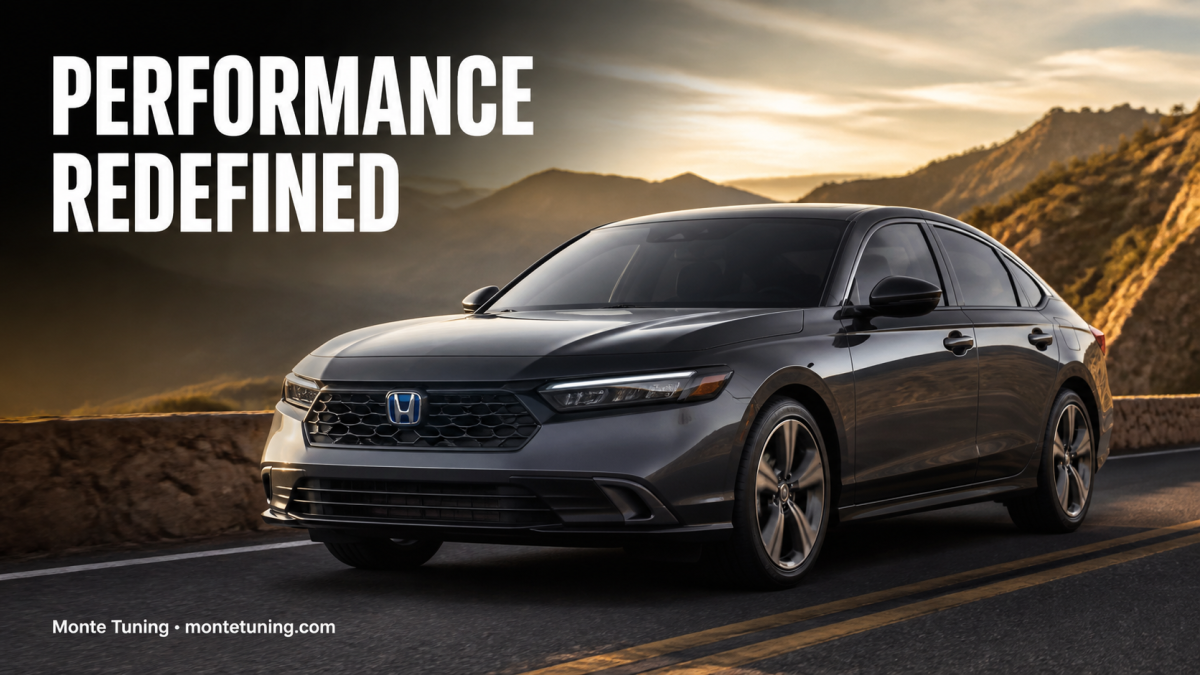
Honda Accord Hybrid ECU tuning is a process of recalibrating internal combustion engine parameters via the OBD2 port, which optimizes air-fuel ratios and ignition timing. This approach enhances throttle response and mid-range torque, providing a more responsive driving experience without modifying the hybrid battery or electric motor control systems.
Most Honda Accord owners are familiar with the dual nature of their vehicle. You have the efficiency of the Atkinson cycle engine and the immediate, silent torque of the electric motors. It is a brilliant package for commuting, but the factory programming is designed primarily for strict emissions compliance and aggressive fuel sipping. What I mean is, the car often feels like it is holding back, particularly when you need that extra bit of power for a highway merge or a quick overtake.
This is where understanding your vehicle’s electronic potential becomes useful. Many drivers assume that because they drive a hybrid, the ECU is a locked box. While you should never interfere with the high-voltage hybrid battery management, the gasoline engine is a different story. It responds to the same tuning principles as any other fuel-injected engine, allowing for a refined feel that makes the daily commute feel significantly less sluggish.
How Hybrid ECU Tuning Changes Driving Dynamics
Tuning the internal combustion component of a hybrid does not turn your sedan into a track car, but it does change the character of the delivery. The Honda Accord Hybrid relies on a complex hand-off between the electric motor and the 2.0-liter gas engine. By adjusting throttle mapping and fuel injection pulse width, you can reduce the perceived lag that often occurs during this transition.
The goal here is not to force the engine to run outside of its design parameters. Instead, it is about cleaning up the efficiency maps. When the engine performs more efficiently, the entire hybrid system works in better harmony. You get a smoother power curve, which effectively translates to better drivability. This is why many enthusiasts look toward non-invasive, plug-and-play solutions rather than permanent, destructive modifications.
Every vehicle and engine configuration responds differently to OBD2 tuning. Before purchasing, it’s worth checking compatibility with your specific make, model, year, and engine — and reviewing the setup guide for your device.
Installation and the Calibration Cycle
One common misconception is that a tuning module works exactly like a light switch. In reality, modern engine management systems are adaptive. After you plug a device like the Monte GT or Monte GTR into the OBD2 port, the ECU needs a period to recognize the new data parameters. This is known as a calibration drive cycle.
During the first 100 to 150 miles of driving, the car’s computer adjusts its short-term and long-term fuel trims. This is a critical phase. If you head straight to the highway and drive aggressively, you might not notice the nuanced improvements in throttle crispness. Instead, try a mix of city traffic and steady-state cruising. This allows the system to learn the optimized mapping effectively.
Common mistakes to avoid during this process include:
- Running low-grade fuel when testing for performance improvements.
- Ignoring maintenance items like air filters or spark plugs.
- Expectations of instant, massive peak horsepower gains in a naturally aspirated hybrid.
Comparison of Tuning Approaches
| Feature | Permanent ECU Flash | Plug-and-Play OBD2 Tuning |
|---|---|---|
| Installation | Invasive (Bench Flashing) | Non-destructive (Port-based) |
| Reversibility | Difficult/Permanent | Full (Unplug to revert) |
| Warranty Impact | Risk of detection | Lower risk (if removed) |
| Primary Focus | Extreme performance | Drivability and efficiency |
Expected gains, optimal drive cycle duration, and compatibility details vary by vehicle. The Monte GT setup guide and Monte GTR setup guide walk through setup step by step for each device model.

Browse all Monte Tuning OBD2 tuners →
Who Benefits from OBD2 Tuning?
If you are the type of driver who appreciates the engineering behind your vehicle but finds the factory eco-tuning a bit too restrictive, you are the ideal candidate for an OBD2 performance upgrade. Modern cars are often programmed for a “one size fits all” efficiency standard that ignores regional fuel quality differences or specific driving styles.
Owners who shop all tuners are typically looking for two things: a more responsive throttle during daily maneuvers and a more seamless integration between the gas and electric motors. Whether you own an older Honda Accord generation or the latest hybrid model, the objective remains the same—to unlock the engine’s potential without voiding warranties or causing long-term mechanical stress. To learn more about our engineering philosophy, you can read about Monte Tuning.
Check compatibility and explore the full lineup:
montetuning.com —
available for US, CA, UK, AU, and ES. Ships worldwide.
Frequently Asked Questions
Is OBD2 tuning safe for my Honda Accord Hybrid?
Yes, because it operates within the safety parameters of the factory ECU. It does not interface with the high-voltage battery or hybrid drive components.
Will this void my vehicle warranty?
Plug-and-play devices are non-destructive and do not leave a permanent digital footprint. Since they are easily removed, they provide a much lower risk profile compared to permanent ECU flashes.
How long until I notice a difference in performance?
After installation, the vehicle typically requires a 100 to 150-mile drive cycle for the ECU to adapt its fuel trims and throttle mapping to the new data.
Can I remove the tuner at any time?
Absolutely. The device is fully reversible. Once unplugged, the engine control unit immediately reverts to its original factory settings.
Do I need a mechanic to install the device?
No. Installation involves simply plugging the device into the OBD2 port under your dashboard. No special tools or mechanical knowledge are required.