
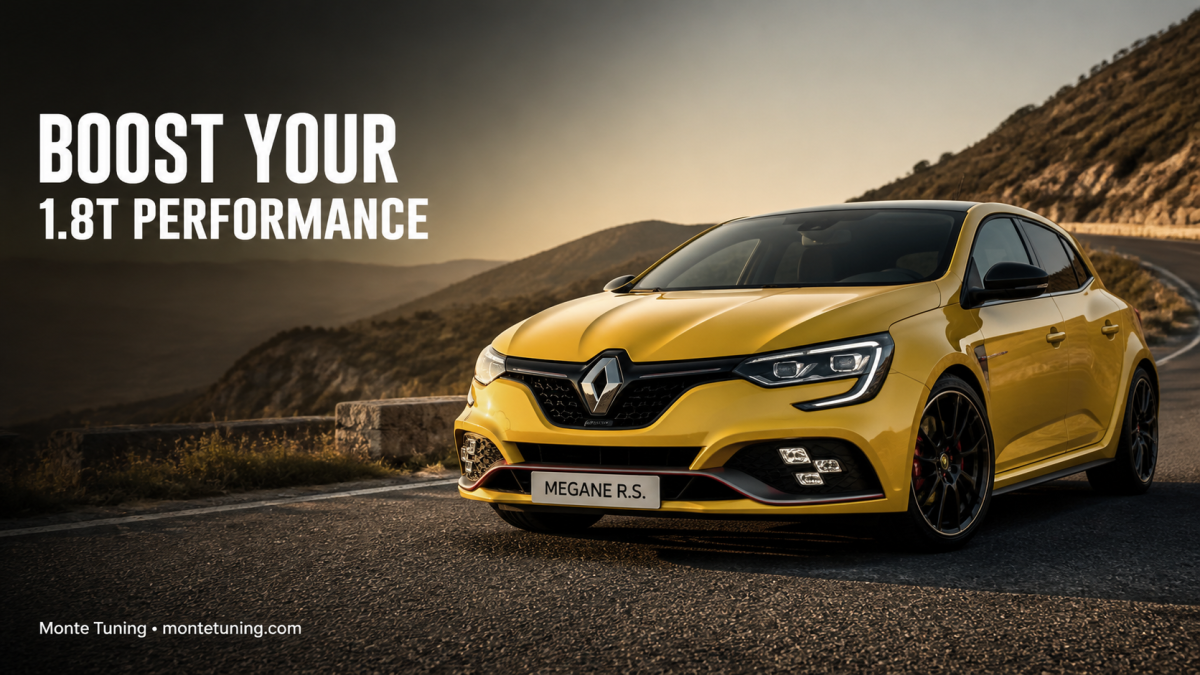
Renault Megane RS tuning is the process of optimizing the M5P 1.8-liter turbocharged engine’s ECU parameters via the OBD2 port, which safely improves horsepower, torque, and throttle response by adjusting boost targets and air-fuel ratios without the need for permanent firmware flashing or mechanical modifications.
For those who drive a Renault Megane RS, the appeal is obvious: it is a purpose-built hot hatch that blends daily usability with serious track capability. Whether you are navigating the winding backroads of the UK or highway driving in North America, the factory calibration is a compromise. It has to account for everything from varying fuel qualities in different climates to the most conservative driving habits. As a result, that potential for extra mid-range pull often remains locked away, waiting for a more precise set of instructions.
Many owners look at traditional ECU remapping as the only path forward, but that involves permanent changes that can be flagged by dealership diagnostics. What I mean is, there is a more transparent, non-invasive way to sharpen the driving experience. By interacting directly with the CAN bus, modern hardware offers a way to wake up the 1.8T engine while keeping your factory warranty protections intact.
Understanding the 1.8T Architecture
The engine powering the Renault Megane RS, specifically the M5P 1.8-liter unit, is a masterclass in modern turbocharging. It features a twin-scroll turbocharger and direct injection, providing a broad torque curve that feels lively right out of the box. However, manufacturers intentionally leave a margin of tolerance in the software. This is not because the engine is weak, but because they need to ensure reliability across thousands of vehicles operating in extreme heat, high altitude, or with lower-grade fuel.
When you use a device like the Monte GT or Monte GTR, you are essentially providing the ECU with optimized data. These devices read the incoming signals for manifold pressure and air-fuel ratios, then request adjustments that allow the turbo to reach its efficiency peak more effectively. The result is not about pushing the engine beyond its physical limits, but rather operating closer to its true potential within the safety parameters defined by the original engineers.
Performance and Efficiency Expectations
One of the most common questions is how much power you can realistically expect. While results vary by vehicle and ambient conditions, enthusiasts often see noticeable improvements in the mid-range—the 3,000 to 5,000 RPM band where you spend most of your time during spirited driving. This is where the Monte GTR shines, providing a smoother, more aggressive pull that makes overtaking feel effortless.
Beyond the raw figures, there is the aspect of fuel efficiency. By improving the ignition timing and increasing low-end torque, the engine does not have to work as hard to maintain cruising speeds. This allows for a more efficient burn, which can lead to a modest increase in highway fuel economy. It is a dual benefit: you get the performance when you want it and the efficiency when you are simply commuting.
Every vehicle and engine configuration responds differently to OBD2 tuning. Before purchasing, it’s worth checking compatibility with your specific make, model, year, and engine — and reviewing the setup guide for your device.
Installation and Compatibility
The beauty of the plug-and-play approach is the simplicity of the installation. You do not need a mechanic, specialized tools, or a laptop to tune your Renault Megane RS. The OBD2 port is typically located in the driver’s footwell. Once connected, the device undergoes a learning phase, typically lasting 50 to 100 miles, as it synchronizes with the ECU’s long-term fuel trims.
If you encounter any questions during the process, the Monte GT setup guide and the Monte GTR setup guide provide clear, step-by-step instructions. These resources are designed to ensure you get the most out of your hardware from the moment you plug it in.
| Feature | Traditional ECU Flash | Monte Tuning OBD2 Device |
|---|---|---|
| Installation | Professional/Mechanic Required | Plug-and-Play (DIY) |
| Reversibility | Difficult/Permanent | Instant/Undetectable |
| Warranty Risk | High (CVN Mismatch) | Minimal (No Flash Footprint) |
| Emissions Status | Often Altered | Maintains Factory Protocol |
| Cost/Value | Higher/Variable | Optimized Performance Investment |

Browse all Monte Tuning OBD2 tuners →
Addressing Common Concerns
It is important to address the myths surrounding tuning. A common misconception is that a plug-in device overrides engine safety limits. In reality, premium OBD2 tuners operate downstream of the factory sensors. If your engine detects poor fuel quality or excessive heat, the factory ECU’s knock sensors and thermal protections remain fully active and will pull timing to protect the internals. We operate strictly within the bounds of what the engine was designed to handle.
Another point of confusion is the difference between cheap “resistor” boxes and actual microprocessors. Early, low-quality tuning devices were often little more than a box with a resistor, designed to trick sensors. Our devices, including the Monte GTR, utilize sophisticated 32-bit architecture to communicate with the car’s computer in real time, making them a safe, intelligent choice for late-model vehicles.
Choosing the Right Path
Deciding to tune your Renault Megane RS is about aligning your car’s output with your driving style. Whether you are looking for that extra bit of confidence on a track day or simply want a more responsive throttle during daily errands, there is a solution tailored to your goals. You can learn more about our philosophy and commitment to quality by visiting our about Monte Tuning page.
Check compatibility and explore the full lineup:
montetuning.com —
available for US, CA, UK, AU, and ES. Ships worldwide.
Frequently Asked Questions
Is OBD2 tuning safe for the Renault Megane RS engine?
Yes. Because the device operates within the factory safety parameters, the engine’s built-in protection systems remain active at all times, ensuring the longevity of your 1.8T powertrain.
Will this void my vehicle warranty?
Plug-and-play devices do not leave a permanent software footprint or modify the ECU firmware, which helps in avoiding the detection issues often associated with permanent flash tuning. Always remove the device before taking the vehicle for service.
Do I need a mechanic to install the device?
No. These devices are designed for easy, tool-free installation directly into the vehicle’s OBD2 port.
How long does it take to see results?
You will typically notice improved throttle response immediately. However, full optimization of fuel trims and timing takes about 50 to 100 miles of varied driving as the device adapts.
How does this differ from a full ECU remap?
A full remap overwrites the car’s software, which is permanent and easily detected by dealers. An OBD2 tuner works externally, making it instantly reversible and safer for vehicles under warranty.