
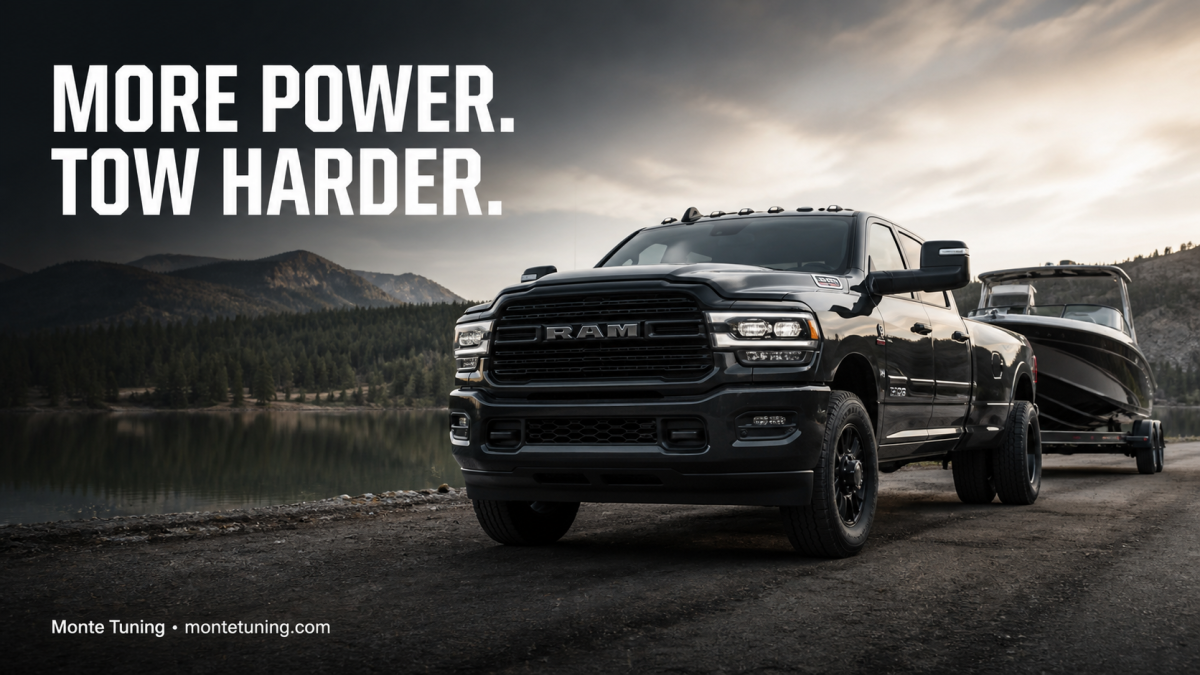
RAM 3500 Cummins 6.7 tuning involves using OBD2-based calibration modules to optimize fuel injection timing, common rail pressure, and boost levels. This approach enhances horsepower, torque, and throttle response while improving fuel efficiency for heavy-duty towing, all without permanently modifying the factory ECU software or risking voided warranty status.
Understanding Performance Gains for the Cummins 6.7
The 6.7L Cummins Turbo Diesel engine is a marvel of industrial engineering, but its factory ECU mapping is intentionally conservative. Manufacturers calibrate these engines to account for everything from extreme arctic cold to high-altitude heat and varying fuel grades across different regions. By utilizing a plug-and-play OBD2 device, you can unlock a portion of the latent performance designed into the engine platform.
Dyno testing on stock 6.7L platforms shows that emissions-intact tuning can realistically yield gains of 30 to 90 horsepower and 80 to 150 lb-ft of torque. The real advantage isn’t just peak numbers, but the distribution of power. You will notice a reduction in turbo lag at intersections and more consistent pulling power on steep inclines, which makes the vehicle feel much more responsive under load.
Optimizing Your Ram for Towing
For those who rely on their Ram 3500 for hauling heavy 5th-wheel trailers or commercial loads, the goal of tuning is efficiency and thermal management. A common misconception is that more power always equates to better towing performance. In reality, the best results come from optimizing the torque curve to minimize downshifting.
When towing, prioritize moderate power settings. This provides the necessary low-end grunt to maintain momentum while keeping Exhaust Gas Temperatures (EGTs) within safe, factory-monitored limits. It is also important to recognize the difference in transmission capabilities. The Aisin AS69RC transmission handles higher torque levels more gracefully than the 68RFE, so adjust your device settings accordingly if you notice the transmission hunting for gears.
Every vehicle and engine configuration responds differently to OBD2 tuning. Before purchasing, it’s worth checking compatibility with your specific make, model, year, and engine — and reviewing the setup guide for your device.
Performance Tuning Methods Compared
| Feature | OBD2 Plug-and-Play | Full ECU Flash/Remap |
|---|---|---|
| Installation | Simple (Plug-in) | Complex (Requires tools) |
| Warranty Impact | Low (Reversible) | High (Flash counters) |
| Emissions Status | Maintains Integrity | Often Risks Compliance |
| Safety Margins | Retains Factory Protocols | Often Overridden |
Why Plug-and-Play is the Modern Choice
In the current automotive landscape, especially for 2025 and 2026 model years, dealing with encrypted ECUs and frequent Over-The-Air (OTA) updates makes traditional flashing risky. An ECU flash can be wiped clean by a standard dealership software update, essentially deleting your investment. A Monte GTR or Monte GT operates externally, meaning your tuning remains active even if the vehicle receives a factory software patch.
Furthermore, regulatory focus on emissions compliance has intensified. By using non-intrusive OBD2 tuning, you avoid the legal and mechanical pitfalls of bypassing DPF or EGR systems. This ensures your truck remains road-legal, passes MOT or emissions inspections, and continues to operate within the mechanical safety parameters defined by the original manufacturer.

Browse all Monte Tuning OBD2 tuners →
Adapting to Your Driving Style
Getting the most out of your setup requires a short adaptation period. After installing a device, the ECU typically needs about 100 to 150 miles of varied driving to calibrate to the new signals. During this time, the system optimizes its fuel mapping and injection timing to match your specific driving environment.
For drivers interested in long-term efficiency, a Monte GT can provide a noticeable bump in real-world fuel economy by optimizing rail pressure during highway cruising. If your priority is maximum power delivery for towing or heavy work, the Monte GTR offers a more aggressive profile tailored to those specific demands. If you are unsure of which device fits your needs, the about Monte Tuning section provides clarity on our design philosophy.
Check compatibility and explore the full lineup:
montetuning.com —
available for US, CA, UK, AU, and ES. Ships worldwide.
Frequently Asked Questions
Is OBD2 tuning safe for my Cummins 6.7?
Yes, when using a non-flashing module. These devices operate within the engine’s pre-programmed safety margins, meaning they do not disable factory limiters like EGT monitoring.
Will this void my factory warranty?
Because these devices do not permanently alter the ECU code or trip flash counters, they are far safer than traditional remaps. Reverting to stock is as simple as unplugging the device before a dealer visit.
Do I need a mechanic to install the tuner?
No. These are designed as true plug-and-play solutions. You can refer to the Monte GT setup guide or Monte GTR setup guide for step-by-step instructions that take only minutes.
How long until I notice improvements?
You will often feel improved throttle response immediately. However, full fuel efficiency and power calibration usually stabilize after 100–150 miles of driving.
Can this help with diesel fuel economy?
Yes. By optimizing injection timing and fuel rail pressure, many drivers report a 1 to 3 MPG improvement during steady-state highway driving.