
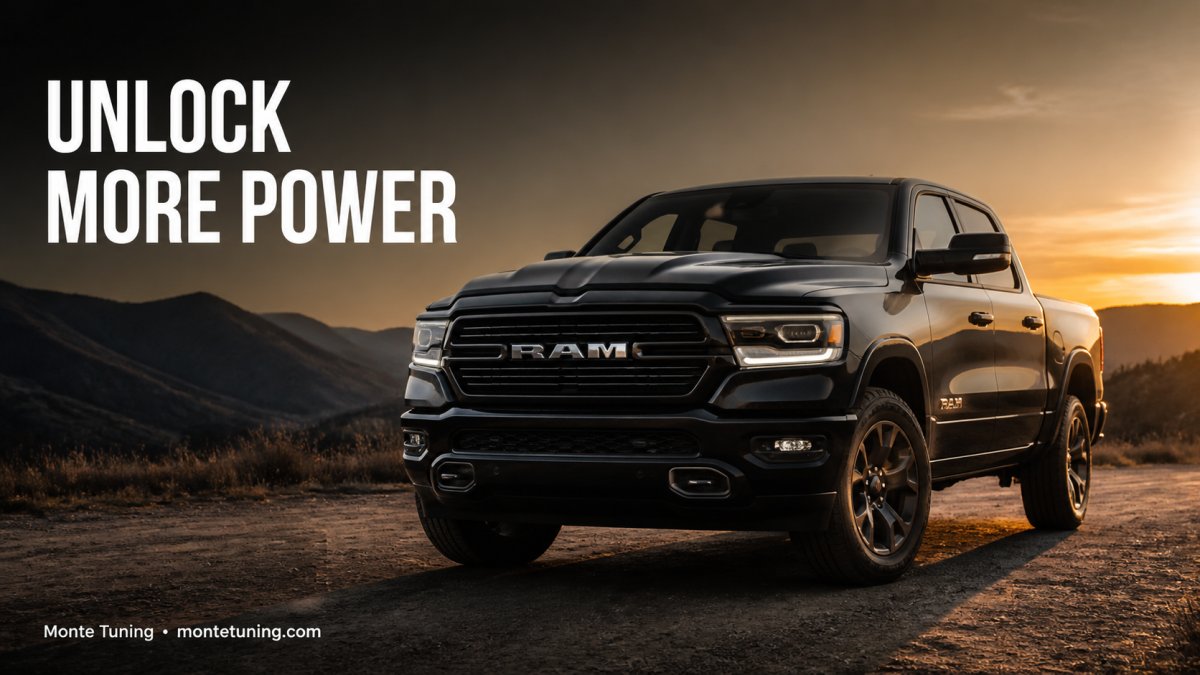
Pickup truck tuning encompasses a range of mechanical and electronic modifications designed to optimize engine performance, towing capability, and fuel efficiency. By refining how the engine processes air, fuel, and timing, truck owners can unlock hidden potential within factory specifications without compromising reliability.
Most modern trucks arrive from the factory with conservative engine calibrations. Manufacturers prioritize broad safety margins to account for extreme climates, low-quality fuel, and inconsistent maintenance schedules. For those who use their trucks for work or recreation, this approach often leaves significant torque and responsiveness on the table.
Whether you are navigating a job site or hauling a trailer across state lines, the desire to sharpen throttle response and improve pulling power is common. Understanding how to safely extract this performance is the difference between a project that enhances your daily driving and one that leads to unwanted service visits.
1. OBD2 ECU Optimization
Modern vehicles rely on an Electronic Control Unit (ECU) to manage combustion. Rather than permanently rewriting factory code, a plug-and-play device connects via the OBD2 port to dynamically refine sensor data. This approach allows the ECU to operate at the higher end of its pre-programmed safety parameters, effectively increasing horsepower and torque while maintaining emissions compliance.
For forced-induction engines like the Ford EcoBoost or Duramax and Cummins diesels, optimizing boost curves and air-fuel ratios can result in noticeable gains in pulling power. Naturally aspirated engines also benefit, particularly in the low-RPM range where torque is needed most for merging or hauling. Choosing a Monte GT or Monte GTR allows for this performance boost to be fully reversible, as it leaves no permanent digital footprint on the vehicle’s internal software.
Every vehicle and engine configuration responds differently to OBD2 tuning. Before purchasing, it’s worth checking compatibility with your specific make, model, year, and engine — and reviewing the setup guide for your device.
2. High-Flow Cold Air Intakes
Engines are essentially giant air pumps. Increasing the volume of cool, dense air reaching the combustion chamber helps the ECU optimize the air-fuel ratio for better power output. Replacing a restrictive factory air box with a high-flow cold air intake is a standard step in improving volumetric efficiency. When paired with an optimized tune, the engine can capitalize on this increased airflow, leading to a more responsive throttle feel under load.
3. Performance Exhaust Systems
If you are increasing the air intake, you must also consider the exit. Performance exhaust systems, particularly cat-back setups, reduce backpressure. This allows the engine to expel exhaust gases more efficiently, reducing pumping losses. While the power gains from an exhaust alone are often modest, the combination of better intake flow and ECU optimization creates a compounding effect, particularly in heavy-duty towing applications.
4. Upgraded Intercoolers
For turbocharged trucks, heat is the enemy of power. During extended towing or heavy acceleration, intake temperatures rise, causing the ECU to pull timing and reduce power to protect the engine. An upgraded, larger-core intercooler keeps intake temperatures lower for longer. This allows the engine to maintain peak boost levels consistently, ensuring your truck performs as well at the end of a long drive as it did at the start.
5. Throttle Response Controllers
Much of the frustration with modern trucks stems from drive-by-wire lag, where the signal from your pedal is filtered by the ECU to prioritize smoothness over responsiveness. A throttle controller sits between the pedal and the ECU to eliminate this artificial delay. While it does not add raw horsepower, it dramatically changes the character of the vehicle, making it feel lighter and more eager to accelerate.

Browse all Monte Tuning OBD2 tuners →
Performance Comparison by Tuning Method
| Method | Power/Torque Gains | Driveability | Reversibility |
|---|---|---|---|
| OBD2 Plug-and-Play | Moderate/High | Improved | Immediate |
| Custom ECU Flash | High | Customizable | Difficult/Permanent |
| Throttle Controller | None | Sharper Response | Immediate |
| Bolt-on Hardware | Low/Moderate | Variable | Labor Intensive |
Performance and Efficiency Goals
Drivers who prioritize utility often seek an edge in towing or highway efficiency. OBD2 tuning is particularly effective because it works within the existing engine management architecture, making it the most practical route for those who want results without the complexity of a full engine remap.
For those looking to explore this, about Monte Tuning provides insight into how these devices are engineered. Whether you are using a Monte GT for daily driving efficiency or a Monte GTR for increased torque, the focus remains on safe, hardware-agnostic performance. If you are preparing for installation, the Monte GT setup guide and Monte GTR setup guide offer clear instructions to ensure the device is correctly integrated with your truck’s systems.
Check compatibility and explore the full lineup:
montetuning.com —
available for US, CA, UK, AU, and ES. Ships worldwide.
Frequently Asked Questions
Is OBD2 tuning safe for my engine?
Yes. Plug-and-play tuning is designed to work within the manufacturer’s built-in safety thresholds. If the engine sensors detect conditions like excessive heat, the ECU retains full authority to intervene and protect the components.
Will this void my vehicle warranty?
Plug-and-play devices do not permanently alter the ECU code or increment flash counters, unlike traditional remapping. Because they can be unplugged completely, they are the most warranty-friendly performance option available.
How long until I notice the results?
While improvements in throttle response are often immediate, maximum engine adaptation usually occurs after a drive cycle of 100 to 150 miles, allowing the ECU to calibrate its fuel trims to the new optimized sensor data.
Do I need a mechanic to install the device?
No. These devices are designed for plug-and-play installation via the OBD2 port, which is located inside the cabin. No tools or mechanical experience are required.
How does this differ from a full ECU remap?
A full remap overwrites the original factory software with new code, which is often permanent and detectable by dealership diagnostic equipment. Plug-and-play tuning modifies sensor signals in real-time, leaving the factory software completely untouched.