
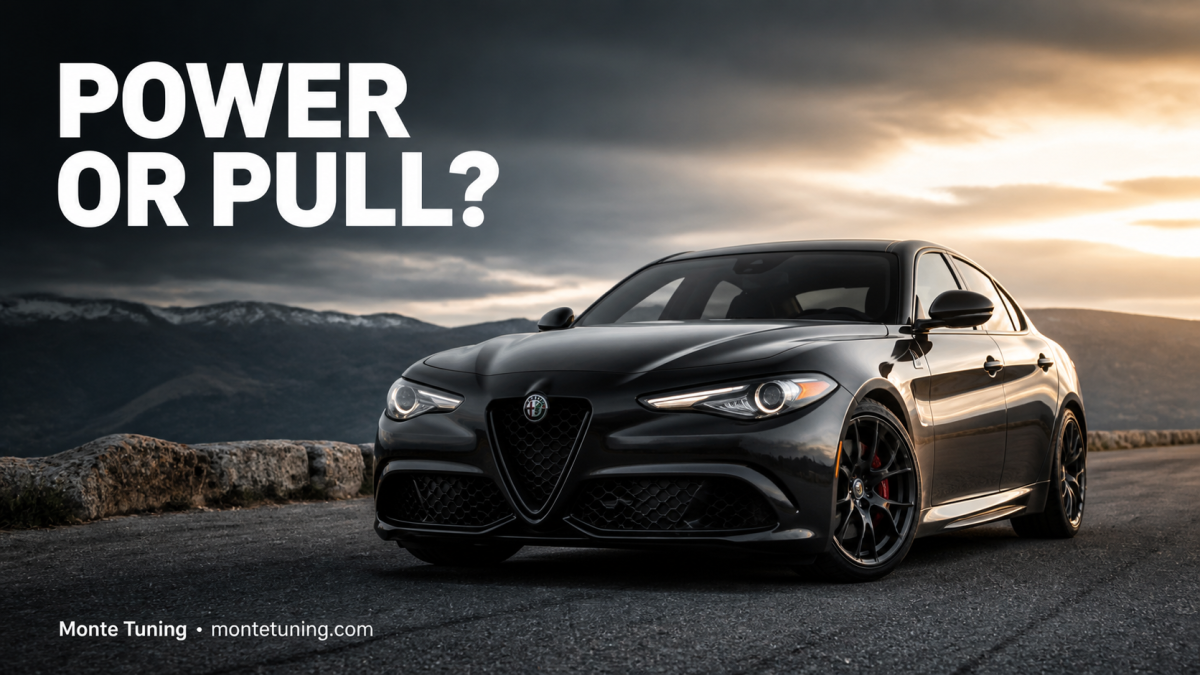
Horsepower is the measure of how quickly an engine performs work, while torque is the raw twisting force that actually moves the vehicle. For most drivers, torque provides the immediate sensation of acceleration and pulling power, whereas horsepower dictates the vehicle’s sustained speed and top-end performance capabilities.
Most modern vehicles leave the factory with conservative engine settings. Manufacturers prioritize universal reliability and broad-spectrum fuel compatibility over peak performance. This often results in a driving experience that feels sluggish, hampered by electronic throttle lag and transmission hesitation during common maneuvers like highway merging or climbing inclines.
Understanding the interplay between these two forces is key to optimizing your car. When you press the accelerator, you are feeling torque. When you hold that speed or push further into the RPM range, you are experiencing the results of your engine’s horsepower. For the everyday enthusiast, the goal is often to reclaim the efficiency and responsiveness that the factory tuned out.
The Engineering Reality: Torque vs. Horsepower
Torque is the force that gets your vehicle moving from a standstill. Technically, it is the rotational force produced by the crankshaft. In practical driving, this is what pushes you back into your seat. Because it is independent of engine speed in terms of raw force, high low-end torque is what makes a car feel lively around town.
Horsepower is a calculated value, derived from the formula: Horsepower = (Torque x RPM) / 5252. Because it relies on engine speed, horsepower is essentially the speed at which your engine can deliver its torque. You need torque to get moving, and you need horsepower to maintain acceleration as you climb higher in the RPM range.
The common misconception is that you must choose between them. In reality, modern OBD2 tuning seeks to optimize the engine’s entire operating map. By refining air-fuel ratios and ignition timing, you can broaden the torque curve, making the engine feel more powerful exactly where you need it—in the mid-range—without necessarily needing to push the engine to its absolute physical limits.
Modern Tuning: Moving Beyond Traditional Remapping
The landscape of vehicle optimization has shifted significantly in 2026. Traditional ECU remapping, which involves overwriting the engine control unit’s base code, carries inherent risks. With the rise of over-the-air (OTA) updates and advanced cybersecurity protocols like UNECE R155, permanent flashes can be wiped by a simple dealer service, or worse, cause system conflicts.
Plug-and-play OBD2 devices like the Monte GT and the Monte GTR operate differently. These devices communicate via the CAN bus to dynamically adjust sensor signals in real-time. They work within the manufacturer’s built-in safety margins, meaning the engine’s core cryptographic signatures remain untouched. If you decide to remove the device, the engine reverts to its factory settings instantly.
Every vehicle and engine configuration responds differently to OBD2 tuning. Before purchasing, it’s worth checking compatibility with your specific make, model, year, and engine — and reviewing the setup guide for your device.

Browse all Monte Tuning OBD2 tuners →
Performance Comparison by Tuning Method
| Method | Mechanism | Reversibility | Best For |
|---|---|---|---|
| Traditional Flash | Overwrites ECU code | Difficult / Permanent | High-build race cars |
| OBD2 Tuning | Signals optimization | Instant (Unplug) | Daily drivers & enthusiasts |
| Piggyback (Custom) | Hardwired intercept | Moderate | Advanced builds |
Expected gains, optimal drive cycle duration, and compatibility details vary by vehicle. The Monte GT setup guide and the Monte GTR setup guide walk through setup step by step for each device model.
The Driver’s Advantage
Optimizing your vehicle is less about chasing an arbitrary “horsepower” number and more about improving the quality of the driving experience. By sharpening throttle response and smoothing out the power delivery, you eliminate the hesitation that often plagues modern fuel-injected engines. When the engine responds more efficiently to your inputs, you find yourself using less throttle to achieve the same result, which is where the potential for improved fuel economy lies.
Those interested in learning more about how this technology fits into their vehicle can read more about Monte Tuning. Whether you are looking for a subtle upgrade in performance or simply want a more engaging drive during your daily commute, the focus should always be on safe, reliable, and reversible improvements.
Check compatibility and explore the full lineup:
montetuning.com —
available for US, CA, UK, AU, and ES. Ships worldwide.
Frequently Asked Questions
Is OBD2 tuning safe for my engine?
Yes. Devices like the Monte GT and GTR operate within the manufacturer’s established safety parameters. They do not remove factory knock sensors or thermal protection limits.
Will this void my vehicle warranty?
Because these devices do not permanently alter the ECU’s software or leave a “flash counter” footprint, they are designed to be undetectable once removed. However, always refer to your local warranty regulations.
How long does it take to see results?
Most modern vehicles require an adaptation period of 100 to 150 miles of mixed driving for the ECU to fully adjust to the optimized signals.
Do I need a mechanic to install the device?
No. These devices are designed for plug-and-play installation via the OBD2 port, requiring no mechanical expertise or special tools.
Can I remove the tuner if I need to?
Absolutely. The primary benefit of this approach is that the process is 100% reversible. Simply unplug the device to return your vehicle to its stock configuration.