
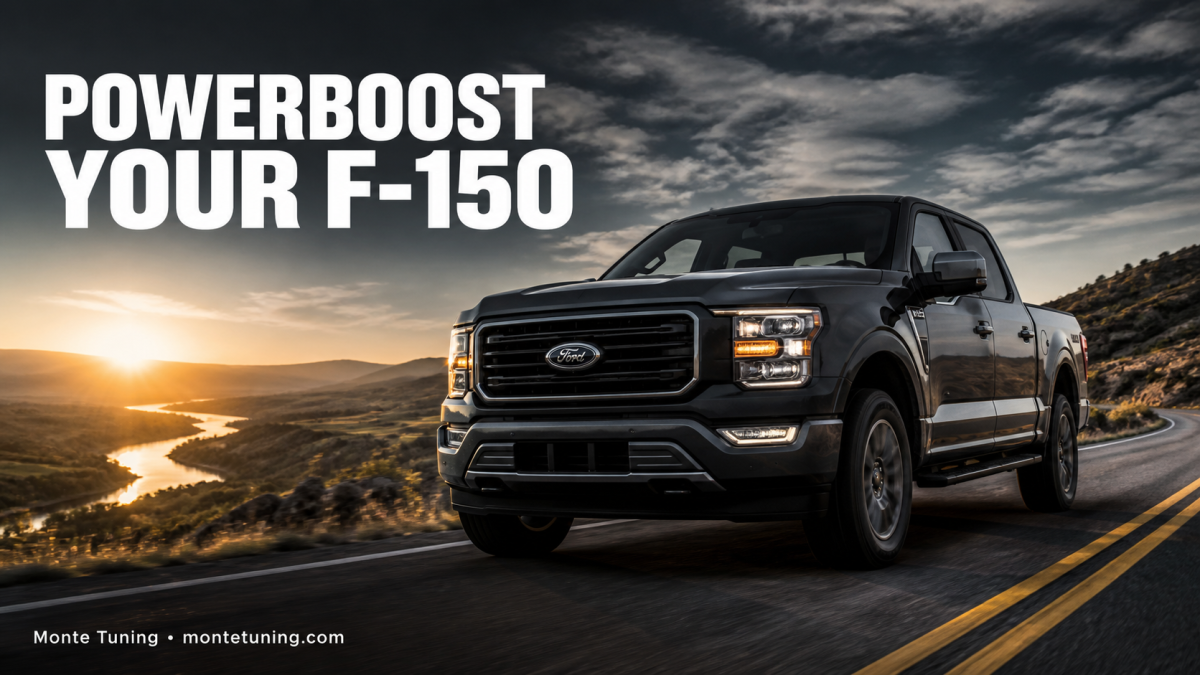
Ford F-150 ECU tuning is the process of optimizing engine management signals via the OBD2 port to improve throttle response, torque, and horsepower. For the PowerBoost hybrid, this approach safely refines the 3.5L EcoBoost engine’s performance without permanent software changes or the need for a professional mechanic.
Real-World Performance for the Modern Pickup
Driving a Ford F-150 PowerBoost offers a unique balance of hybrid efficiency and twin-turbo grunt. Yet, many owners find that factory software intentionally dulls throttle input to prioritize smoothness or specific emissions targets, creating a perceived sluggishness that doesn’t reflect the engine’s true capability. When you are hauling a trailer or navigating steep highway grades, that lag can be more than just a minor annoyance.
Performance tuning has evolved significantly over the last few years. Gone are the days when unlocking more power meant invasive hardware changes or irreversible modifications to the vehicle’s brain. Today, the focus for most truck enthusiasts is on safe, plug-and-play efficiency that aligns with how these vehicles are actually driven—as daily workhorses that occasionally need a little extra confidence under the pedal.
How OBD2 Tuning Optimizes the PowerBoost
Modern Ford ECUs are complex, heavily encrypted systems. Rather than overwriting the factory read-only memory, an OBD2 tuning device works by dynamically intercepting and optimizing data signals—such as boost pressure and throttle position—in real-time. This provides the engine with more precise instructions, allowing it to operate closer to its mechanical potential.
The beauty of this method lies in its reversibility. Because the factory calibration remains untouched, your truck’s long-term diagnostics are not flagged in the way traditional flash remaps might be. This is particularly relevant for those worried about over-the-air updates, which can sometimes wipe out a custom flash tune overnight.
The Adaptive Learning Process
Once you connect a device, the engine control unit and the 10-speed transmission do not instantly change their personality. The truck requires a calibration period. Think of it as the vehicle learning the new parameters of your driving style. Over the first 50 to 100 miles, you will likely notice the transmission becoming crisper and the transition between the electric motor and the 3.5L V6 becoming more intuitive.
Every vehicle and engine configuration responds differently to OBD2 tuning. Before purchasing, it’s worth checking compatibility with your specific make, model, year, and engine — and reviewing the setup guide for your device.
Performance Expectations and Compatibility
When discussing performance gains, it is essential to remain grounded. While internet forums might boast about massive spikes, real-world results depend on fuel quality, atmospheric conditions, and the mechanical health of the truck. Using premium 91 or 93 octane fuel is the single most effective way to allow the engine to take full advantage of the optimized timing and boost curves.
| Feature | OBD2 Plug-and-Play | Traditional Flash Remap |
|---|---|---|
| Installation | DIY (Minutes) | Professional Required |
| ECU Integrity | Factory code remains | Overwritten |
| OTA Update Risk | None | High (Risk of wipe) |
| Performance | Optimized daily gains | Aggressive/Track-focused |
Expected gains, optimal drive cycle duration, and compatibility details vary by vehicle. The Monte GTR support & setup guide walks through setup step by step for each device model.

Browse all Monte Tuning OBD2 tuners →
Why Owners Choose Plug-and-Play Solutions
For many enthusiasts, the decision comes down to risk management and ease of use. You want better towing power and a sharper throttle, but you do not want to risk your warranty or spend a weekend at a mechanic’s shop. A Monte GT or a Monte GTR offers a middle ground: a device that delivers tangible performance increases while being entirely removable.
This is not about turning a daily driver into a dedicated race machine. It is about removing the artificial constraints that manufacturers place on engines to account for the lowest common denominator in global fuel quality and maintenance. By narrowing these tolerances, you often find that the truck not only feels faster but also operates more efficiently under normal cruising conditions.
To learn more about the engineering philosophy behind these devices, you can read more about Monte Tuning and our approach to vehicle performance.
Check compatibility and explore the full lineup:
montetuning.com —
available for US, CA, UK, AU, and ES. Ships worldwide.
Frequently Asked Questions
Is OBD2 tuning safe for my engine?
Yes, when using a reputable device designed to work within factory safety parameters. By optimizing signal delivery rather than overriding engine safeguards, these devices enhance performance while maintaining the integrity of your engine’s internal protection systems.
Will this void my vehicle warranty?
Plug-and-play OBD2 tuners do not permanently modify the factory ECU code. Because they can be removed in minutes, they do not leave behind the digital footprint associated with traditional flash tuning, which is often what leads to warranty disputes.
How long until I notice results?
You will typically notice improved throttle response immediately. However, it takes roughly 50 to 100 miles of varied driving for the vehicle’s transmission and fuel management systems to fully adapt to the new power curves.
Do I need a mechanic for installation?
No. These devices are designed for end-users and require no mechanical experience or special tools. Simply plug the device into your truck’s OBD2 port, follow the specific Monte GT setup guide or GTR guide, and you are ready to go.
Can I use this on other Ford models?
Many devices are platform-specific. While the technology is similar across the Ford lineup, always check the compatibility list for your specific engine and model year before installation.