
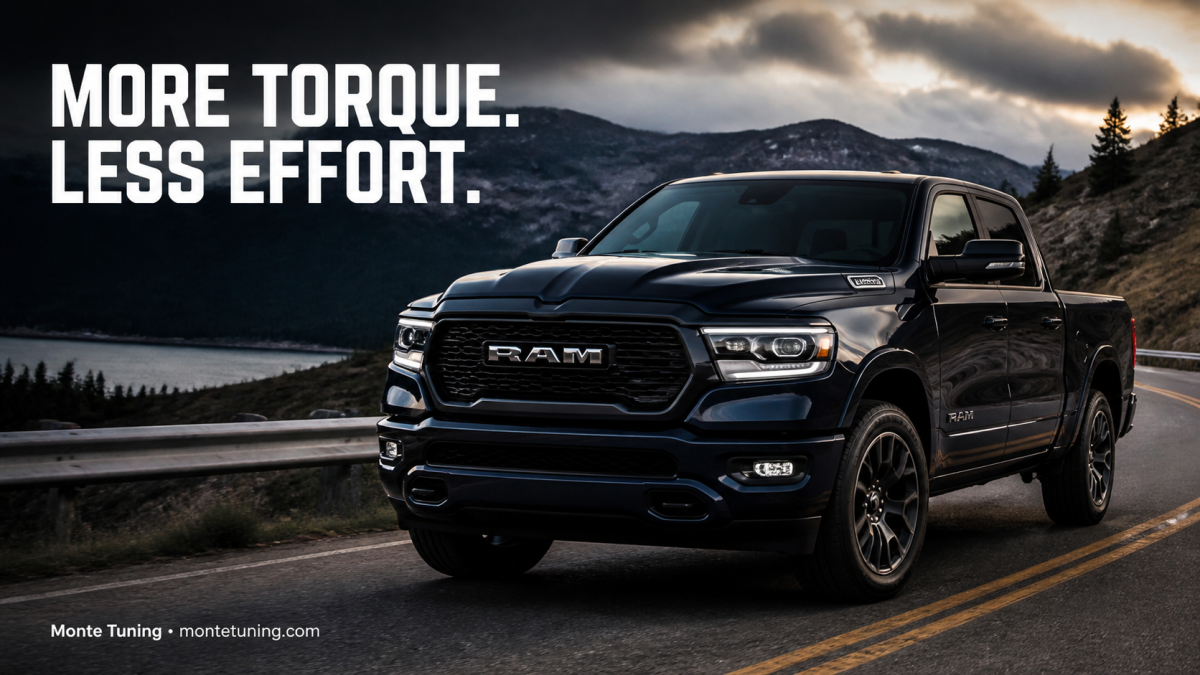
Choosing between a traditional diesel chip and permanent ECU tuning involves balancing engine performance gains against warranty concerns and long-term vehicle health. OBD2 plug-and-play tuning offers a non-invasive, reversible alternative that optimizes fuel delivery and throttle response without the risks associated with hardware splicing or software overwriting.
Most modern trucks, from the high-torque Cummins and Power Stroke platforms to global favorites like the Hilux, leave the factory with significant performance buffers. Manufacturers calibrate these engines conservatively to handle everything from poor fuel quality in remote regions to extreme environmental shifts. This leaves a performance gap that many owners want to close, yet few want to achieve by permanently altering their vehicle’s factory software.
The core of the issue often comes down to how your truck communicates. Traditional diesel chips—or piggyback units—often intercept sensor signals to force higher fuel rail pressure. While this adds power, it can occasionally lead to rougher idling or soot accumulation because the Engine Control Unit (ECU) isn’t fully aware of the changes. Conversely, permanent ECU remapping rewrites the factory code, which is highly effective but creates a digital fingerprint that can complicate warranty claims.
The Evolution of Engine Optimization
The shift toward OBD2 tuning reflects a broader change in how we approach vehicle maintenance. Today, the focus is on smarter integration. Modern OBD2 devices, such as the Monte GT device, communicate directly with the vehicle’s CAN bus. Instead of tricking a single sensor, these devices work in tandem with the ECU to fine-tune injection timing and fuel maps in real-time.
Performance vs. Reliability
A common misconception is that increasing horsepower automatically reduces engine longevity. In reality, most modern turbo-diesels have mechanical safety tolerances that allow for a 15% to 25% increase in output without exceeding structural limits. The primary benefit of this optimization is not just raw speed, but improved torque delivery. By smoothing out the torque curve, your engine can pull harder at lower RPMs, which is particularly noticeable when towing or climbing steep grades.
Every vehicle and engine configuration responds differently to OBD2 tuning. Before purchasing, it’s worth checking compatibility with your specific make, model, year, and engine — and reviewing the setup guide for your device.

Browse all Monte Tuning OBD2 tuners →
Comparing Tuning Approaches
| Method | Installation | Reversibility | Warranty Risk |
|---|---|---|---|
| Diesel Chips (Piggyback) | Under-hood splicing | Hard | Moderate (visible) |
| ECU Remapping | Permanent flash | Difficult | High (digital footprint) |
| OBD2 Tuning | Plug-and-play | Full | Low (removable) |
What to Expect After Installation
Tuning is not a magic switch that yields instant peak power the moment you plug it in. Your truck’s ECU is a learning computer that uses Long-Term Fuel Trims. After installing a device like the Monte GTR device, the vehicle requires a drive cycle—usually 100 to 150 miles—to map the new parameters against your driving habits. During this time, you might notice smoother shifts and a reduction in throttle lag.
If you encounter excessive soot or elevated engine temperatures, it is often a sign that the truck requires maintenance rather than a tuning issue. Always ensure your fuel and air filters are fresh and that your DPF and EGR systems are functioning as intended before attempting to maximize performance.
Why Modern Owners Prefer OBD2
As automakers move toward encrypted ECUs and frequent Over-The-Air (OTA) updates, traditional remapping has become more difficult and expensive. Furthermore, environmental regulations continue to tighten, making emissions-intact performance the only viable path for most enthusiasts. The goal is to get the most out of your truck while keeping it compliant and reliable for daily use.
The About Monte Tuning page highlights our approach to this balance: creating devices that work within the factory’s safety protocols rather than pushing against them. Whether you are looking to improve towing efficiency or simply want a more responsive pedal feel, our products focus on enhancing the driving experience without requiring a mechanic.
Expected gains, optimal drive cycle duration, and compatibility details vary by vehicle. The Monte GT setup guide and the Monte GTR setup guide walk through these processes step by step for each device model.
Check compatibility and explore the full lineup: montetuning.com — available for US, CA, UK, AU, and ES. Ships worldwide.
Frequently Asked Questions
Is OBD2 tuning safe for my engine?
Yes, when performed within factory safety parameters. OBD2 tuners like those from Monte Tuning work within the engine’s designed tolerances to optimize performance without overstressing components.
Will this void my factory warranty?
In many regions, including the US, manufacturers cannot void a warranty based on an aftermarket device unless they prove it caused a specific failure. Because OBD2 tuners are non-destructive and leave no permanent flash on the ECU, they significantly lower the risk compared to permanent remapping.
Do I need a mechanic to install the tuner?
No. These devices are designed for plug-and-play installation via the OBD2 port, requiring no tools or mechanical knowledge.
How long does it take to see results?
While some changes are immediate, the engine’s ECU typically requires a drive cycle of 100–150 miles to fully adapt to the new optimization settings.
How does this differ from a full ECU remap?
A remap overwrites your factory software, which is permanent and often detectable by dealers. OBD2 tuning sits between the ECU and your driving inputs, adjusting parameters dynamically without altering the original software.