
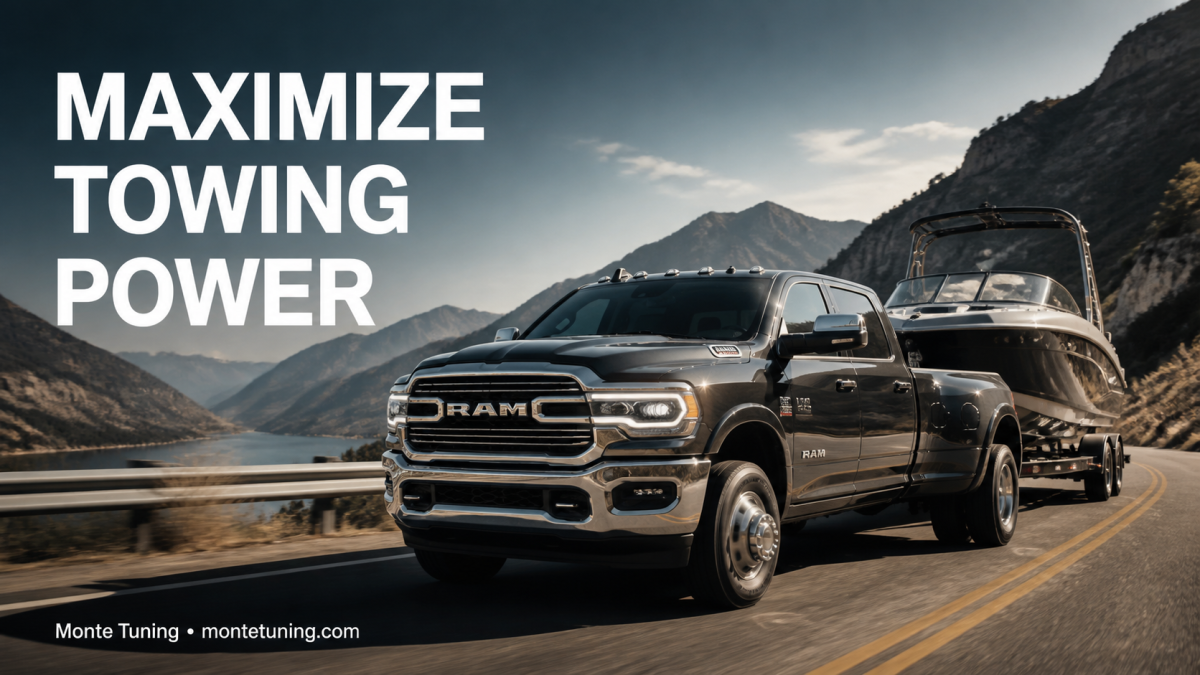
Diesel ECU tuning is the process of optimizing engine management parameters via the vehicle’s OBD2 port to improve torque output, throttle response, and fuel efficiency. This practice enhances low-end grunt for towing heavy loads while maintaining factory safety protocols, all without permanent software modifications or the need for a professional mechanic.
There is a specific kind of frustration that comes with towing a heavy trailer through rolling hills. You watch the transmission hunt for gears, the engine temperature climb, and the fuel gauge drop faster than expected. Most modern diesel engines are capable of so much more, but they are held back by conservative factory calibrations designed for universal conditions—including low-quality fuel and neglected maintenance schedules.
Understanding how to safely unlock that latent potential changes the towing experience from a chore into something closer to effortless. Whether you are hauling a horse trailer or a heavy camper, the goal is not to chase peak horsepower on a dyno, but to broaden the torque curve exactly where you need it most.
1. Prioritize Low-End Torque Over Peak Horsepower
When you are pulling a load from a standstill or climbing a steep grade, horsepower is secondary. Torque is what actually gets the mass moving. Factory engine management systems often limit torque in the lower RPM ranges to manage emissions and drivetrain stress. An OBD2 tuning device can request adjusted fuel rail pressure and injection timing, allowing the turbocharger to spool earlier. This delivers immediate power, reducing the need for constant downshifting.
2. Optimize Injection Timing for Efficiency
Diesel engines rely on precise injection timing to achieve complete combustion. By refining this timing, you improve fuel atomization, which translates to more energy extracted from every drop of diesel. This often results in a 10% to 15% improvement in fuel economy while towing, as the engine does not have to work as hard to maintain cruising speeds on the highway. Consistent, stable combustion also keeps engine vibrations lower, which is a subtle but welcome benefit on long hauls.
3. Use Load-Specific Tuning Maps
The most common mistake enthusiast drivers make is running an overly aggressive tune while under heavy load. Aggressive maps often increase fuel delivery, which can spike Exhaust Gas Temperatures (EGTs) to dangerous levels. When towing, you should always select a dedicated towing profile. If your device supports it, choosing a map that prioritizes torque stability over raw power prevents excessive heat buildup and keeps your DPF and EGR systems running within their intended thermal windows.
Every vehicle and engine configuration responds differently to OBD2 tuning. Before purchasing, it’s worth checking compatibility with your specific make, model, year, and engine — and reviewing the setup guide for your device.
4. Master the Drive Cycle
Plug-and-play OBD2 devices like the Monte GT or the Monte GTR work by interacting with the ECU in real-time. Once installed, the engine needs time to adapt. Completing a proper drive cycle—a combination of city stop-and-go driving and highway cruising—allows the ECU to recalibrate its short-term and long-term fuel trims. Skipping this step often prevents the engine from reaching its optimal performance state.
5. Monitor Your Vital Signs
Towing places a unique stress on the cooling system and the turbocharger. Even with a well-calibrated tune, you should keep an eye on your EGTs. If you are pushing your rig hard, aim to keep sustained temperatures below 1,250°F to 1,300°F. If you notice temperatures climbing too high, backing off the throttle slightly or shifting into a lower gear can bring them back to a safe range quickly. Being proactive is the best way to ensure the longevity of your engine.

Browse all Monte Tuning OBD2 tuners →
Performance Comparison by Tuning Method
| Feature | Permanent ECU Flash | OBD2 Plug-and-Play |
|---|---|---|
| Installation | Professional required | User-friendly DIY |
| Reversibility | Difficult/Often requires dealer | Fully reversible (instant) |
| Warranty Impact | High (software footprint) | Low (no permanent trace) |
| Safety Limiters | Often removed | Maintained (factory-safe) |
Engine Performance and Daily Driving
For many drivers, the appeal of Monte GTR or Monte GT technology is that it transforms the vehicle without the risk associated with permanent ROM modifications. Modern software-defined vehicles are becoming increasingly difficult to flash, and OTA updates from manufacturers can easily wipe out traditional tuning files. OBD2 devices offer a dynamic, future-proof alternative that adapts to your needs.
You do not need to be a professional mechanic to notice the difference in throttle response or the reduction in transmission gear hunting. These devices are designed for drivers who want to get more out of their investment without sacrificing reliability. You can learn more about our engineering philosophy by reading about Monte Tuning, or if you have already chosen your device, you can find detailed instructions in the Monte GT setup guide or the Monte GTR setup guide.
Check compatibility and explore the full lineup:
montetuning.com —
available for US, CA, UK, AU, and ES. Ships worldwide.
Frequently Asked Questions
Is OBD2 tuning safe for my diesel engine?
Yes, when using a reputable device that respects factory safety limits. Plug-and-play tuners operate within the safe parameters set by the manufacturer, ensuring that EGTs and boost pressures remain within the engine’s design specifications.
Will this void my vehicle warranty?
Laws like the Magnuson-Moss Warranty Act protect consumers by stating that a warranty cannot be voided simply due to the presence of an aftermarket part. Because these devices are fully removable and leave no permanent software footprint, they are far less intrusive than a traditional ECU flash.
How long until I notice a difference in towing?
Most drivers notice an immediate improvement in throttle response and low-end torque. However, it can take up to 50–100 miles of varied driving for the ECU to fully adapt and for you to experience the full benefits of the tune.
Do I need a mechanic for installation?
No. These devices are designed for plug-and-play installation. If you can plug a cable into a port, you can install the tuner yourself. Detailed guides are provided for every step of the process.
How does this differ from a full ECU remap?
A remap overwrites the original software on the engine’s computer, which is often permanent and detectable by dealerships. An OBD2 tuner intercepts signals dynamically; it can be removed in seconds, returning the vehicle to its stock configuration without any trace of modification.