
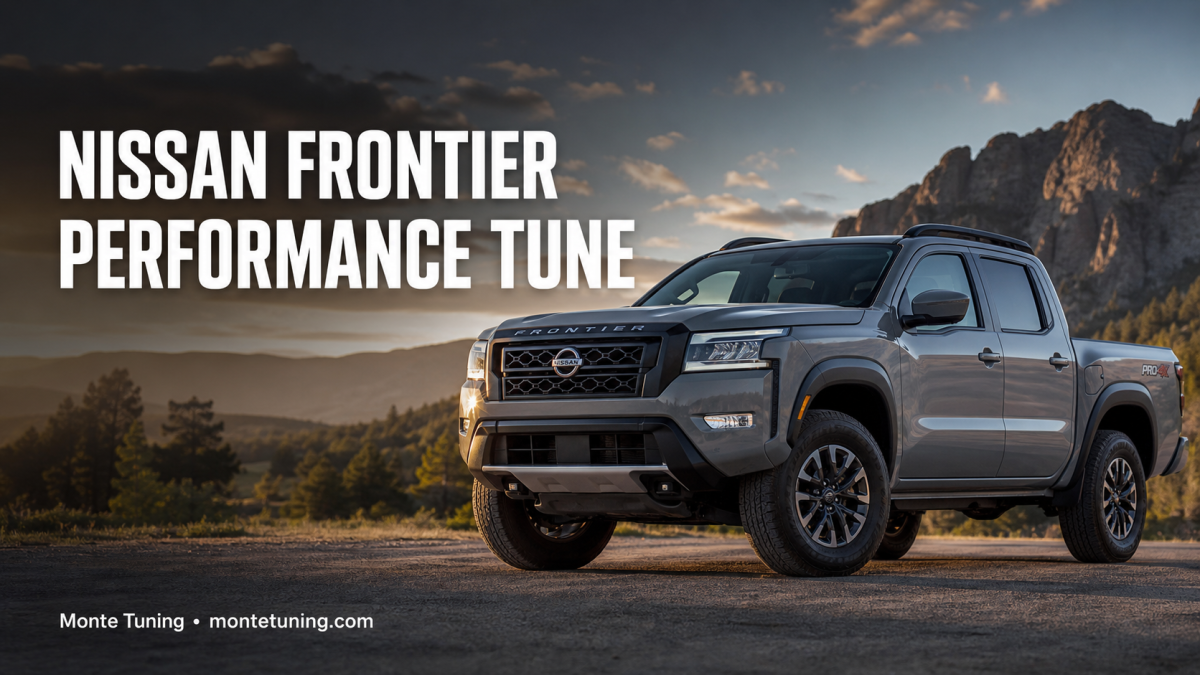
A Nissan Frontier 3.8L V6 tune is a process of optimizing the engine control unit’s parameters via the OBD2 port, which improves throttle response, shifts the torque curve for better low-end pull, and enhances fuel efficiency without requiring mechanical modifications or permanent ECU flashes.
Driving the latest generation of the Nissan Frontier, particularly those equipped with the 3.8L VQ38DD engine, reveals a truck that is capable on paper but often frustrating in practice. While the factory output of 310 horsepower is respectable, many owners notice a distinct lag in the drive-by-wire throttle and a tendency for the transmission to hunt for gears. This behavior is less about engine failure and more about factory calibration designed for average-case scenarios rather than driver preference.
For those who use their truck for towing, heavy hauling, or simply commuting, the difference between factory settings and a dialed-in tune is the difference between a sluggish response and a truck that feels eager to accelerate. Achieving this balance no longer requires expensive hardware swaps or risky ECU re-flashing that could flag your vehicle at a dealership.
Understanding the VQ38DD Performance Potential
The 3.8L V6 engine in the modern Nissan Frontier is a naturally aspirated powerhouse, but it is heavily managed by software designed to prioritize emissions and fuel economy above immediate power delivery. Unlike a turbo engine where you might increase boost pressure to gain power, tuning a naturally aspirated V6 focuses on ignition timing, air-fuel ratio optimization, and sharpening the electronic throttle map.
The primary benefit of a quality OBD2 tuning module is a shift in the powerband. By calibrating the fuel and ignition tables, a tune can bring the peak torque output down from the factory 5,000 RPM range to a more usable 4,200 RPM. This change makes the truck feel much lighter under load, especially when pulling away from a stop or merging onto a highway.
5 Steps to Optimizing Your Frontier
Using an OBD2 tuner is a straightforward process, but success depends on following a structured approach to ensure the ECU adapts correctly to the new parameters.
- Baseline Maintenance Preparation: Before attempting any tuning, ensure your truck is running on clean 0W-20 synthetic oil and that your air filter is clear. An optimization device cannot compensate for neglected mechanical maintenance.
- Fuel Optimization: To allow the engine to safely handle more aggressive ignition timing, fill your tank with the highest quality premium unleaded fuel (91 or 93 octane) available in your region.
- Installation Sequence: Plug your device into the OBD2 port located under the driver-side dashboard. Turn the ignition to the ON position without starting the engine. This allows the module to initiate a handshake with the ECU for 30 to 60 seconds.
- The Calibration Drive: After installation, the vehicle needs to learn. Drive for roughly 150 miles (200 km) in mixed conditions. This period allows the long-term fuel trims to stabilize as the engine computer learns the new operating parameters.
- Post-Tune Monitoring: Evaluate the changes by observing smoother throttle transitions and improved gear selection.
Every vehicle and engine configuration responds differently to OBD2 tuning. Before purchasing, it’s worth checking compatibility with your specific make, model, year, and engine — and reviewing the setup guide for your device.

Browse all Monte Tuning OBD2 tuners →
Comparison of Tuning Approaches
| Method | Permanence | Ease of Use | Primary Benefit |
|---|---|---|---|
| OBD2 Plug-and-Play | Fully Reversible | High (DIY) | Throttle response & torque shift |
| ECU Flash / Remap | Permanent | Low (Professional) | Peak horsepower |
| Piggyback Module | Reversible | Medium | Fuel trim adjustment |
Modern Trends: Why Plug-and-Play Wins
The automotive landscape is shifting toward heavily encrypted ECUs and frequent Over-The-Air (OTA) updates. If you perform a permanent flash on your ECU, a dealer-pushed update can easily overwrite your data, potentially leaving the vehicle in a state that requires a trip to the dealership. Plug-and-play modules like the Monte GT and the Monte GTR act as a secondary layer of intelligence that remains unaffected by factory updates, making them a more stable long-term investment for the daily driver.
Who Benefits Most from an OBD2 Tune?
Drivers who feel that their truck is held back by factory software are the primary candidates for this upgrade. If you find yourself consistently pressing the pedal further than expected just to get a linear response, or if you feel the truck struggles to maintain momentum on hills, these devices are designed to bridge that gap. You can learn more about our philosophy at about Monte Tuning.
Whether you are looking for the entry-point performance of the Monte GT or the refined capabilities of the Monte GTR, the goal is to make your truck feel more responsive. If you need assistance with installation, the Monte GT setup guide and the Monte GTR setup guide provide clear, step-by-step instructions to get you running quickly.
Check compatibility and explore the full lineup:
montetuning.com —
available for US, CA, UK, AU, and ES. Ships worldwide.
Frequently Asked Questions
Is OBD2 tuning safe for my engine?
Yes, when using premium modules that operate within the engine’s factory safety tolerances. These devices optimize existing parameters rather than bypassing engine protection limits.
Will this void my factory warranty?
Because these devices are fully reversible and do not leave a flash trace on the ECU, they are generally not detectable once removed. However, you should always remove the device before taking your vehicle in for dealership service.
How long until I notice results?
While throttle response changes are often felt immediately, the full optimization of fuel trims and gear shifting occurs over the 150-mile drive cycle as the ECU adapts to the new sensor data.
Do I need a mechanic to install the device?
No tools are required. Installation is a plug-and-play process that takes less than five minutes, making it accessible for any owner regardless of mechanical experience.
Is this the same as a professional ECU remap?
No. A remap is a deep software change often used for highly modified engines. An OBD2 module is a non-invasive tuning solution ideal for stock or lightly modified vehicles where ease of use and reversibility are priorities.