
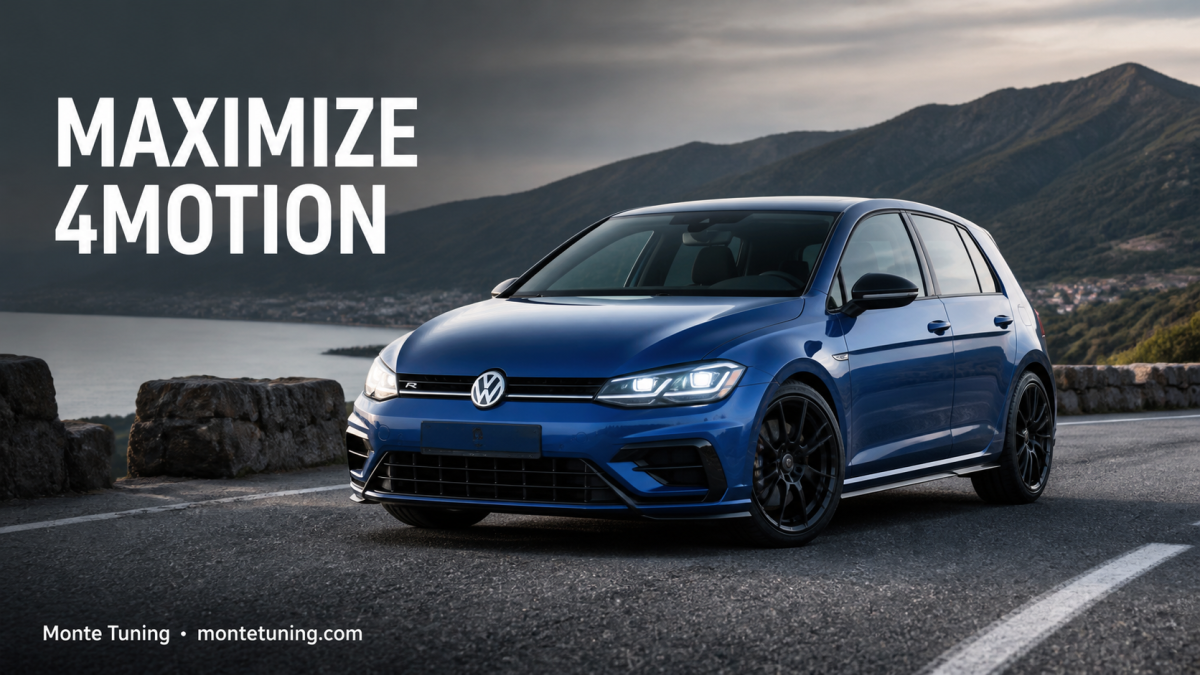
VW Golf R tuning is the process of optimizing the factory Engine Control Unit (ECU) parameters via OBD2 connectivity, which enhances horsepower, torque, and throttle response while maintaining engine safety protocols for the 4Motion all-wheel-drive system.
There is a specific feeling that every Volkswagen Golf R owner recognizes: the moment you press the accelerator and the 4Motion system grips the pavement. The EA888 engine platform, from the early Mk6 R to the advanced Gen 4 units in the latest golf 8 r, is remarkably capable. Yet, factory engineers build in significant headroom to account for varying fuel qualities and maintenance habits globally. This is where performance optimization begins.
You do not need to be a professional tuner or spend hours in a garage to tap into that hidden potential. Modern OBD2 tuning focuses on real-time adjustments to boost pressure and ignition timing. Whether you are driving a golf 7 r on a winding mountain road or navigating daily traffic in a golf 8 r line, the goal remains the same: a more responsive, efficient, and engaging driving experience without altering the permanent software on your ECU.
1. Pre-Installation Maintenance Checks
Before introducing any performance optimization to your volkswagen golf r, the vehicle must be in top mechanical condition. Tuning amplifies the demands on your engine, meaning any existing minor issues—like worn spark plugs or aging coil packs—will become more apparent.
- Inspect spark plugs: Ensure they are correctly gapped and replaced if they have high mileage.
- Verify fluids: Fresh engine oil and a topped-up coolant reservoir are essential for managing thermal load.
- Check for fault codes: A healthy engine should be free of any existing “check engine” lights before you attempt to apply any performance module.
2. The Plug-and-Play Installation
The appeal of an OBD2 device like the Monte GT lies in its simplicity. Because these units interface through the diagnostic port rather than rewriting the ROM of your ECU, installation is entirely reversible. To perform this safely, ensure the ignition is off and the key fob is kept a few feet away from the vehicle. This puts the ECU into a deep sleep mode, preventing potential errors upon the first startup.
3. The Drive Cycle Calibration
Patience is a necessary part of the process. Once the module is plugged in, the car does not reach its peak performance immediately. The factory ECU needs a “drive cycle”—typically 20 to 50 miles of mixed driving—to adjust its Long-Term Fuel Trims (LTFT) and safely adapt to the new boost and ignition requests. During this period, the car’s computer is effectively “learning” how to maximize the new parameters while keeping combustion ratios within safe, factory-defined limits.
Every vehicle and engine configuration responds differently to OBD2 tuning. Before purchasing, it’s worth checking compatibility with your specific make, model, year, and engine — and reviewing the setup guide for your device.
4. Capitalizing on 4Motion and Haldex
The vw golf r is famous for its 4Motion system, which distributes power to prevent wheel spin. When you increase engine output, you are asking more of this drivetrain. On older platforms, the Haldex system is heavily front-biased; upgrading your tires can make a massive difference in how that power is put to the ground. For those in the golf 8 r, the native torque-vectoring system is already well-equipped to handle the power increase by aggressively shifting torque to the outside rear wheel, making the car feel sharper and more planted during cornering.
5. Monitoring the Signs of Success
A well-tuned EA888 engine will feel noticeably more linear, with a reduction in the typical “flat spots” often found in the factory power band. Your throttle response should feel immediate. If you experience any stuttering or hesitation under load, this is rarely the fault of the tuning device itself. Rather, it is usually the engine’s way of telling you that the ignition system—specifically the spark plugs—needs attention to handle the increased cylinder pressure.

Browse all Monte Tuning OBD2 tuners →
Comparison of Tuning Approaches
| Feature | OBD2 Plug-and-Play | Traditional ECU Flash |
|---|---|---|
| Installation | DIY, 10 minutes | Professional shop required |
| Reversibility | Instant (unplug) | Complex (restore to stock) |
| Warranty Impact | Lower risk (no flash counter) | High risk (TD1 code) |
| Best For | Daily drivers, warranty-conscious | Extensive hardware modifications |
Performance Goals and Optimization
Choosing between a Monte GT and a Monte GTR depends on how you use your vehicle. The GT is designed for balanced efficiency and improved daily drivability, while the GTR focuses on maximizing the power band for those who enjoy a more spirited driving style. By optimizing the engine’s ability to hold higher gears and reducing the throttle input required for cruising, many drivers find that they can maintain or even improve their fuel economy alongside their horsepower gains.
Expected gains, optimal drive cycle duration, and compatibility details vary by vehicle. The Monte Tuning support guides walk through setup step by step for each device model. For example, if you are unsure about the installation process, the Monte GT setup guide provides clear, technical, yet accessible steps to get you up and running.
Check compatibility and explore the full lineup: montetuning.com — available for US, CA, UK, AU, and ES. Ships worldwide.
Frequently Asked Questions
Is OBD2 tuning safe for my Golf R?
Yes. Quality OBD2 devices work within the engine’s existing safety architecture. They do not disable knock sensors or thermal protections, ensuring the engine remains within safe operating parameters.
Will this void my vehicle warranty?
While no modification is risk-free, OBD2 devices do not trigger the permanent “flash counter” that dealerships check during a traditional ECU remap. This makes them a more warranty-conscious choice than permanent software overwrites.
How long until I notice a difference?
You will notice improved throttle response immediately upon installation. Full power delivery and fuel efficiency adaptations typically stabilize after a 20 to 50-mile drive cycle.
Do I need a mechanic for installation?
No. These devices are designed for plug-and-play installation via the diagnostic port, requiring no mechanical experience or specialized tools.
How does this differ from a full ECU remap?
A full remap overwrites your car’s permanent software. OBD2 tuning intercepts data and communicates with the ECU in real-time, offering a reversible performance boost without permanent changes.