
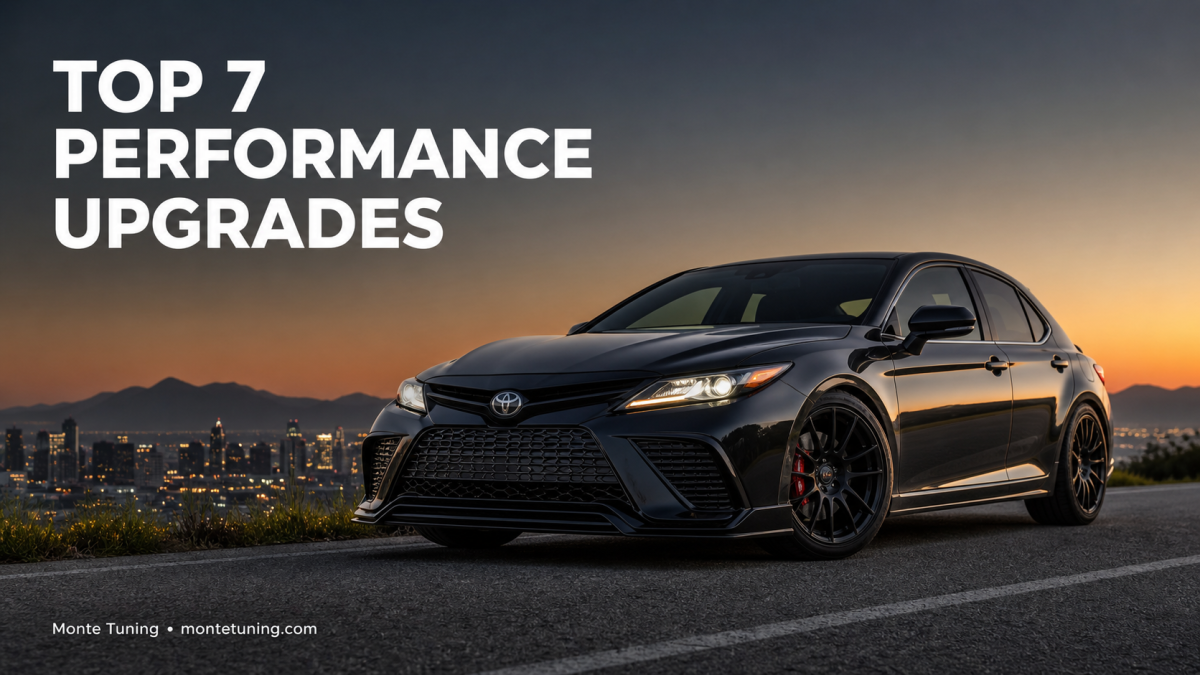
Performance tuning is the process of optimizing a vehicle’s engine control unit (ECU) parameters, such as air-fuel ratios and boost pressure, to enhance horsepower, torque, and fuel efficiency. OBD2 tuning offers a non-invasive, reversible method to achieve these gains without permanent software modifications or mechanical alterations.
Most modern vehicles leave the factory with conservative settings to accommodate diverse global fuel qualities and varying climates. For the automotive enthusiast or the daily driver, this means a significant portion of the engine’s potential is intentionally left on the table. Tuning isn’t just for track days; it is about reclaiming that efficiency and responsiveness, often resulting in a more engaging and economical driving experience.
Understanding OBD2 Tuning for 2025
In the current landscape of vehicle maintenance, plug-and-play OBD2 modules represent the most accessible performance upgrade. These devices communicate directly with the vehicle’s ECU to refine operating parameters in real-time. Unlike traditional flash tuning, which rewrites the ECU’s core memory and leaves a permanent digital footprint, OBD2 modules function externally.
For those interested in how this technology integrates with modern systems, the Monte GT and Monte GTR utilize this logic to balance power delivery with fuel economy. Because these units do not permanently alter factory software, they remain a preferred choice for owners mindful of vehicle warranties and long-term maintenance cycles.
The Role of the Drive Cycle
A common misconception is that performance gains are instantaneous upon engine start. Modern vehicles utilize adaptive ECUs that require a calibration period—a drive cycle—to adjust fuel trims and sensors to the new data inputs. This process typically takes between 50 to 150 miles. Patience during this period is essential for the ECU to stabilize and for the driver to feel the full benefit of the optimization.
Every vehicle and engine configuration responds differently to OBD2 tuning. Before purchasing, it’s worth checking compatibility with your specific make, model, year, and engine — and reviewing the setup guide for your device.
Top 7 Performance Upgrades for 2025
While the market is flooded with various aftermarket parts, the following list focuses on modifications that offer tangible benefits for everyday driving and vehicle longevity.
- OBD2 Performance Tuning: The most efficient way to improve throttle response and power delivery without mechanical labor.
- High-Flow Air Filters: A simple step to improve airflow, allowing the engine to breathe more freely under load.
- Performance Tires: Often overlooked, upgrading to high-quality rubber is the most effective way to improve handling and safety.
- Enhanced Exhaust Systems: Focusing on cat-back systems helps reduce backpressure, complementing the gains from ECU optimization.
- Throttle Controllers: These devices remove factory delay, providing a more direct connection between the pedal and the engine.
- Upgraded Ignition Components: Fresh, high-performance spark plugs ensure consistent combustion, especially in tuned engines.
- Fluid Management: Switching to high-performance synthetic oils and cooling fluids ensures the engine remains stable under increased output.

Browse all Monte Tuning OBD2 tuners →
Comparison of Tuning Approaches
| Feature | OBD2 Plug-and-Play | Traditional Flash Tune |
|---|---|---|
| Installation | Non-invasive (DIY) | ECU modification |
| Reversibility | Fully reversible | Often permanent |
| Warranty Risk | Low (no ECU write) | High (flash counter) |
| Optimal For | Daily drivers, enthusiasts | Full race builds |
Expected gains, optimal drive cycle duration, and compatibility details vary by vehicle. The Monte GT setup guide and Monte GTR setup guide walk through setup step by step for each device model.
Why Drivers Choose OBD2 Optimization
The primary motivator for modern drivers is the desire to sharpen vehicle dynamics without the complexity or cost associated with professional tuning shops. Whether it is reducing throttle lag in a daily commuter or optimizing power output in a turbocharged engine, the goal is a more intuitive driving experience. Those who want to learn more about the engineering philosophy behind these improvements can find additional details about Monte Tuning.
Check compatibility and explore the full lineup:
montetuning.com —
available for US, CA, UK, AU, and ES. Ships worldwide.
Frequently Asked Questions
Is OBD2 tuning safe for my engine?
Yes, when using reputable devices that operate within factory safety parameters. These tuners maintain OEM safety protocols, such as limp mode, to protect the powertrain.
Will this void my vehicle warranty?
In many regions, including the US under the Magnuson-Moss Warranty Act, a manufacturer must prove that a modification caused a failure to deny a warranty claim. Because plug-and-play devices do not overwrite ECU software, they are generally less invasive than traditional tuning.
Do I need a mechanic to install the tuner?
No. These devices are designed for plug-and-play installation via the diagnostic port, requiring no mechanical expertise.
How long until I notice results?
After installation, the vehicle requires a drive cycle of 50 to 150 miles for the ECU to calibrate correctly. Most drivers notice smoother acceleration and improved response shortly thereafter.
Is this different from a full ECU remap?
Yes. A remap permanently changes the software on your vehicle’s computer. An OBD2 tuner manages data in real-time, leaving your factory software original and intact.