Ford Performance Chip & ECU Tuner Guide
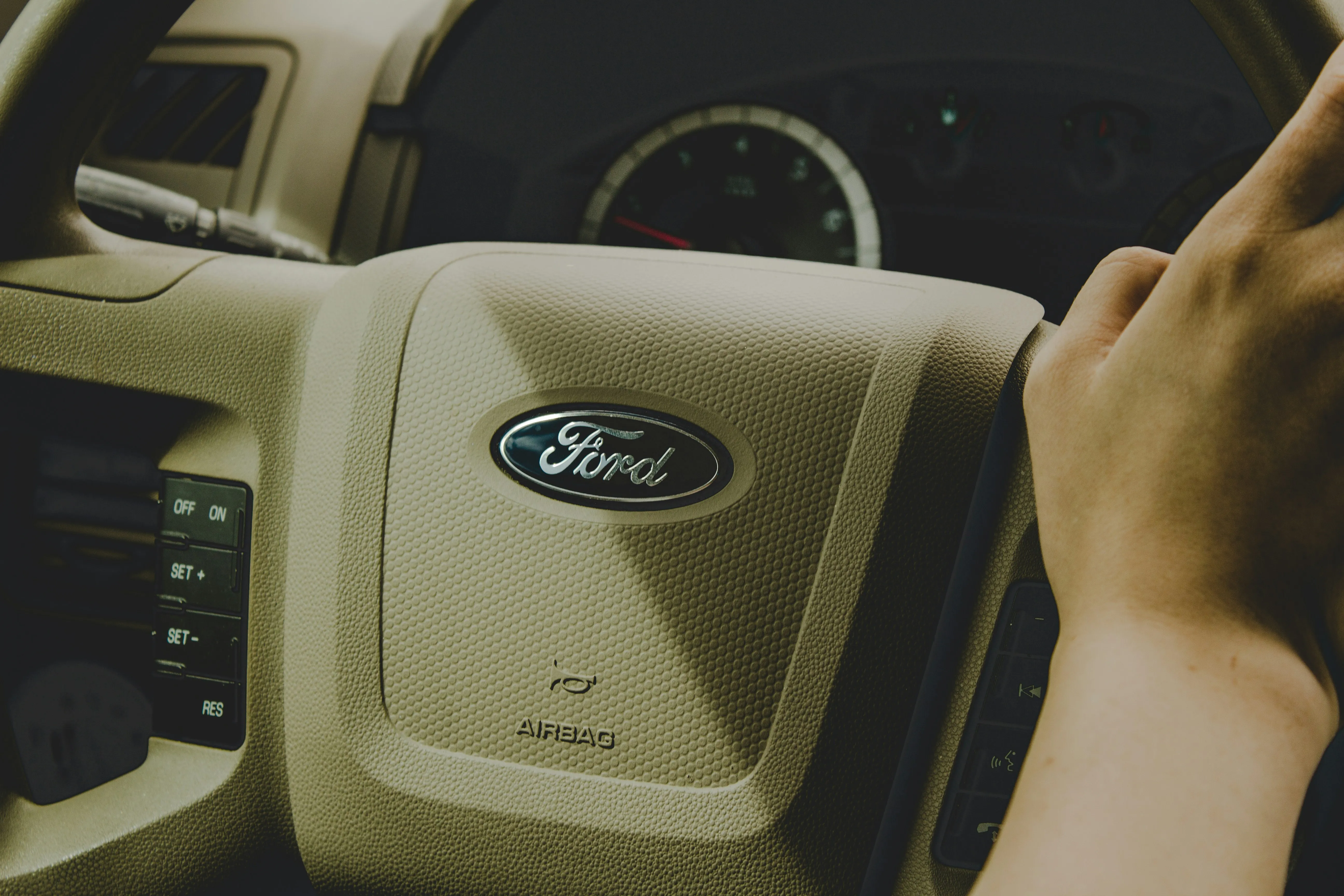
Ford engines leave the factory with a calibration written to work everywhere — every climate, every fuel grade, every driver. That leaves a margin, and a real tuner can use part of it. This guide covers what a Ford performance chip or Ford ECU tuner actually changes, what it adds on popular Ford models, and what to be skeptical of.
Models covered here: F-150, Mustang, Ranger, Explorer, Escape, F-250 Super Duty. The full list of Ford models, engines and years Monte fits is on the Ford page.
What Does a Ford Performance Chip Actually Do?
A real tuner changes how the engine computer (ECU) runs the engine: how much fuel it injects, when it fires the spark and, on turbocharged engines, how much boost it asks for. That is where extra horsepower and torque come from. A cheap “chip” that only fools a sensor — or a plug with a blinking light — changes none of that and adds nothing you can measure. Turbocharged engines have the most room, because a calibration can raise boost; naturally aspirated engines gain from fuelling and timing alone, so a little less.
How Much Power Does a Tune Add to a Ford?
| Model | Engine | Years | Factory | With Monte (estimate) |
|---|---|---|---|---|
| F-150 | 2.7L V6 turbo | 2018–2026 | 325 hp / 400 lb-ft | 359 hp / 439 lb-ft (+34 hp) |
| Mustang | 2.3L four turbo | 2024–2026 | 315 hp / 350 lb-ft | 349 hp / 389 lb-ft (+34 hp) |
| Ranger | 2.3L four turbo | 2019–2026 | 270 hp / 310 lb-ft | 304 hp / 349 lb-ft (+34 hp) |
| Explorer | 2.3L four turbo | 2020–2026 | 300 hp / 310 lb-ft | 334 hp / 349 lb-ft (+34 hp) |
| Escape | 1.5L three turbo | 2023–2026 | 180 hp / 199 lb-ft | 209 hp / 231 lb-ft (+29 hp) |
| F-250 Super Duty | 6.7L V8 turbo diesel | 2020–2026 | 475 hp / 1050 lb-ft | 509 hp / 1089 lb-ft (+34 hp) |
“With Monte” figures are our estimate from the factory ratings, not a dyno test of your car. Other engines and years are on each model page.
Among these, the Ford F-150 with the 2.7L V6 turbo gains the most by our estimate: about +34 hp.
For scale, here is what Monte measured on a chassis dyno, before and after: Ford F-150 Raptor 3.5 EcoBoost +21 hp and +31 lb-ft (lab test, SEMA Garage, Diamond Bar, CA); Nissan 370Z 3.7 V6 +22.3 hp (Dynocom customer dyno report); Mercedes C300 2.0 turbo +25.1 hp (dyno on video). Moderate, measurable gains — not the 30–35% some boxes promise.
Which Ford Models Benefit Most?
Turbocharged Ford models have the most room: Escape, Explorer, F-150, F-250 Super Duty, Mustang, Ranger. Naturally aspirated engines still gain, mostly in the mid-range.
Will a Tuner Improve My Ford’s MPG?
Monte’s Economy modes are made for steady, relaxed driving; how much fuel they save depends on the car and how it’s driven, and we don’t quote a figure until we’ve measured it. Be skeptical of any device that promises big MPG gains on every car.
Performance Chip vs. Throttle Controller
A throttle controller changes how the gas pedal is reported to the engine computer: the car feels more eager, but with the pedal on the floor the engine makes the same power. A tuner changes the calibration itself, and that shows up on a dyno. Monte is a tuner and does not change the pedal signal. More in Throttle controller myths debunked.
Modes, Gauges and Diagnostics
Monte has several modes, including Eco. Monte GT is set up and switched from the Monte app on your phone. Monte GTR carries the same calibration and adds its own touch screen: live gauges, a code reader that reads and clears fault codes, a 0–60 timer and a virtual dyno.
Installation, Going Back to Stock and Warranty
Monte plugs into the OBD-II port under the dashboard — about five minutes, no tools, no wiring. It does not rewrite the ECU’s stored software, so unplugging it returns your Ford to stock. Dealer policies vary; removing the device before service is the standard, conservative practice, and we can’t promise how an individual dealer will react.

