
Stage 1 tuning is the process of optimizing an engine’s software parameters via the OBD2 port to unlock hidden performance, which typically results in improved throttle response, increased torque, and enhanced fuel efficiency without requiring physical hardware modifications or permanent changes to the factory ECU.
Most modern vehicles leave the factory with conservative engine settings. Manufacturers intentionally detune engines to account for varying global fuel quality, extreme climate conditions, and long service intervals. This leaves a significant portion of an engine’s potential capacity unused. For the average owner, this means the car they drive every day is capable of more than what they experience behind the wheel.
Whether you are navigating stop-and-go city traffic or looking for more passing power on the highway, optimizing these factory parameters can change how a vehicle feels. It is not about turning a daily commuter into a track car, but rather about refining the engine’s behavior to match its actual mechanical limits. Many drivers find that the responsiveness gained is the most noticeable improvement, as it eliminates the sluggishness often programmed into modern throttle maps.
Understanding the Technical Foundation
At its core, Stage 1 tuning targets the Engine Control Unit (ECU). The ECU governs critical aspects of engine performance, including ignition timing, air-fuel ratios, and boost pressure. By adjusting these values, you can achieve a more efficient combustion cycle. Traditional methods often involve rewriting the software permanently, but modern plug-and-play solutions utilize the OBD2 port to communicate with the engine in real time.
Every vehicle and engine configuration responds differently to OBD2 tuning. Before purchasing, it’s worth checking compatibility with your specific make, model, year, and engine — and reviewing the setup guide for your device.
The Role of OBD2 Plug-and-Play Devices
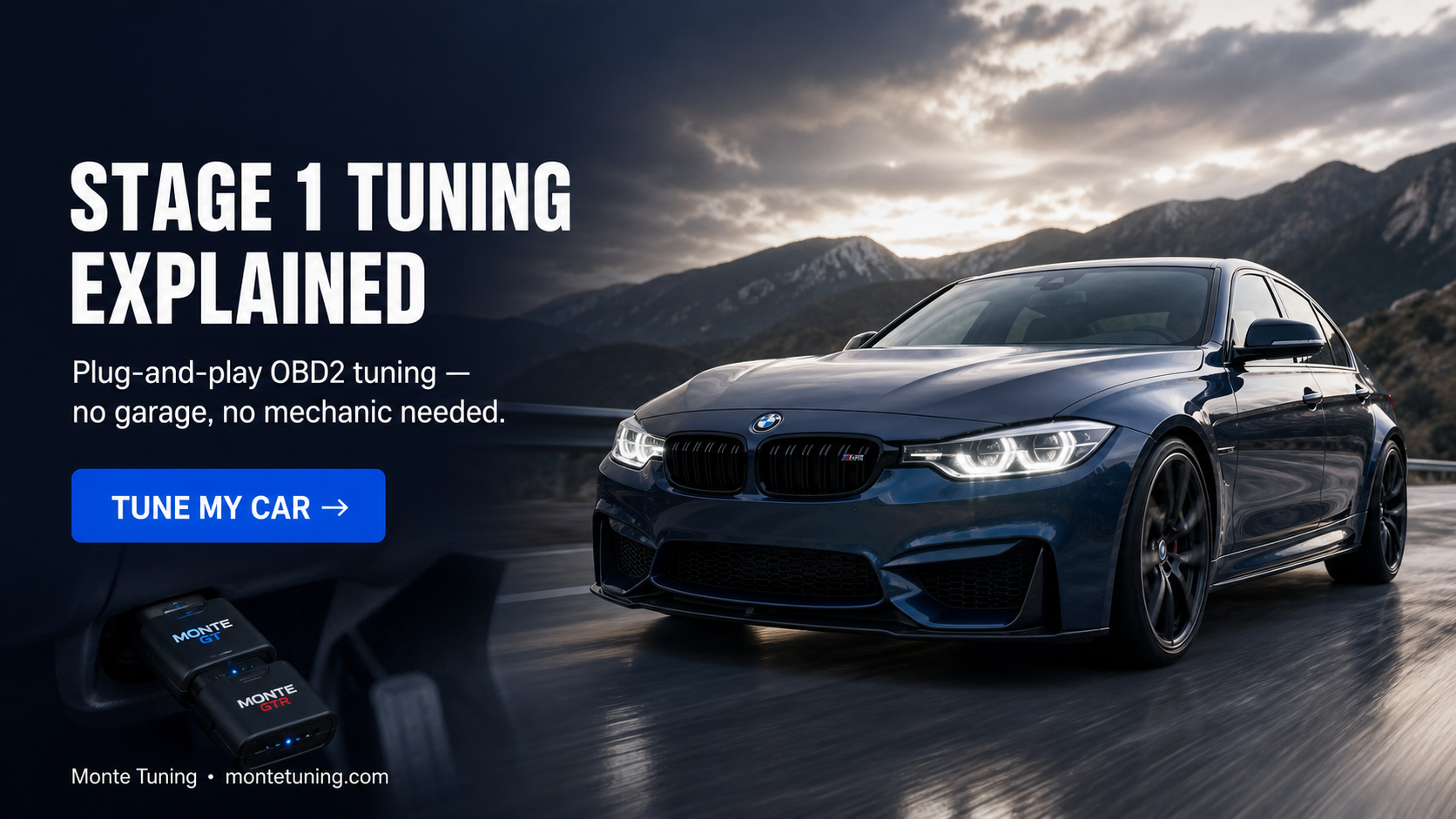
Devices like the Monte GT and the Monte GTR function by integrating directly into the vehicle’s CAN bus. They do not overwrite the manufacturer’s software. Instead, they provide optimized data to the engine management system, allowing it to operate more efficiently. This approach is inherently safer because it remains within the factory’s safety margins, avoiding the strain associated with aggressive, custom-built ECU re-flashes.
Browse all Monte Tuning OBD2 tuners →
Performance Expectations by Engine Type
The impact of tuning varies heavily based on the induction system of your engine. Turbocharged engines, both petrol and diesel, usually see the most dramatic gains because there is significant room to optimize boost pressure and fuel delivery. Naturally aspirated engines, while offering more modest peak horsepower gains, often show the most improvement in linear power delivery and throttle sensitivity.
| Engine Type | Primary Benefit | Expected Gain Potential |
|---|---|---|
| Turbocharged Petrol | Boost & Throttle Response | 15% – 25% |
| Turbocharged Diesel | Torque & Fuel Efficiency | 15% – 25% |
| Naturally Aspirated | Throttle & Driveability | 5% – 10% |
Expected gains, optimal drive cycle duration, and compatibility details vary by vehicle. The Monte GT setup guide and the Monte GTR setup guide walk through setup step by step for each device model.
Modern Regulatory and Technical Trends
As we move toward 2026, the automotive landscape is shifting. With the introduction of stricter emissions standards like Euro 7 and increased ECU encryption under UNECE regulations, the ability to perform invasive software modifications is becoming restricted. This is why non-invasive, reversible OBD2 tuning is becoming the standard for enthusiasts. Since these devices reside externally on the CAN bus, they are less likely to be affected by routine manufacturer over-the-air updates that often wipe permanent ECU flashes.
Choosing the Right Path for Your Vehicle
Drivers who benefit most from this type of optimization are those who want to improve their driving experience without the risk of voiding a warranty or compromising engine longevity. Because these devices are reversible, they offer a peace-of-mind solution for owners who want to enjoy better performance today but need to return the vehicle to stock for service visits or resale.
To learn more about the philosophy behind our approach, you can read about Monte Tuning and our commitment to safe, effective engine optimization. Whether you choose the Monte GT for balanced daily improvements or the Monte GTR for more advanced tuning parameters, you can easily shop all tuners to find the right fit for your vehicle.
Check compatibility and explore the full lineup:
montetuning.com —
available for US, CA, UK, AU, and ES. Ships worldwide.
Frequently Asked Questions
Is OBD2 tuning safe for my engine?
Yes, when done correctly. Professional OBD2 tuners operate within the factory-set safety tolerances of your engine’s ECU, ensuring performance gains do not exceed what the mechanical components were designed to handle.
Will this void my vehicle warranty?
Plug-and-play OBD2 devices are designed to be fully reversible. Since they do not permanently modify the ECU software, they do not leave the “flash counter” marks that dealers typically use to identify modified vehicles.
Do I need a mechanic to install the device?
No. These devices are designed for plug-and-play installation. You simply locate your car’s OBD2 port—usually under the dashboard—and connect the device. No tools or technical expertise are required.
How long does it take to see results?
While many drivers feel an immediate improvement in throttle response, most systems require a short “drive cycle” of 100 to 150 miles to allow the ECU to fully calibrate and adapt to the new optimization parameters.
Is this different from a full ECU remap?
Yes. A full remap overwrites the original factory software with a new file. OBD2 tuning works as an external module that communicates with the ECU in real time, making it reversible and less susceptible to being wiped by dealer software updates.