

ECU tuning via OBD2 is the process of using an external hardware device to intercept and optimize real-time engine sensor data, which improves horsepower, torque, and throttle response without permanently overwriting the vehicle’s original factory software. This method provides a reversible, plug-and-play performance enhancement for modern engines.
Most modern vehicles leave the factory with conservative engine calibrations designed to accommodate the widest possible range of driving styles, fuel qualities, and climates. While this is great for manufacturers, it often leaves potential performance and efficiency locked behind a layer of software restraint. For many drivers, the experience of a slight hesitation when pressing the accelerator or the feeling that a vehicle struggles during highway passing is not a mechanical failure, but simply an engine operating within these restrictive factory parameters.
Engine control unit optimization has shifted significantly in recent years. Where early tuning methods required permanent flashing or soldering of the ECU, current technology allows for dynamic adjustments via the vehicle’s CAN bus. This means you can achieve a more responsive, efficient driving experience without the risk of voiding warranties through permanent modifications or the need for a professional mechanic.
Understanding How OBD2 Optimization Works
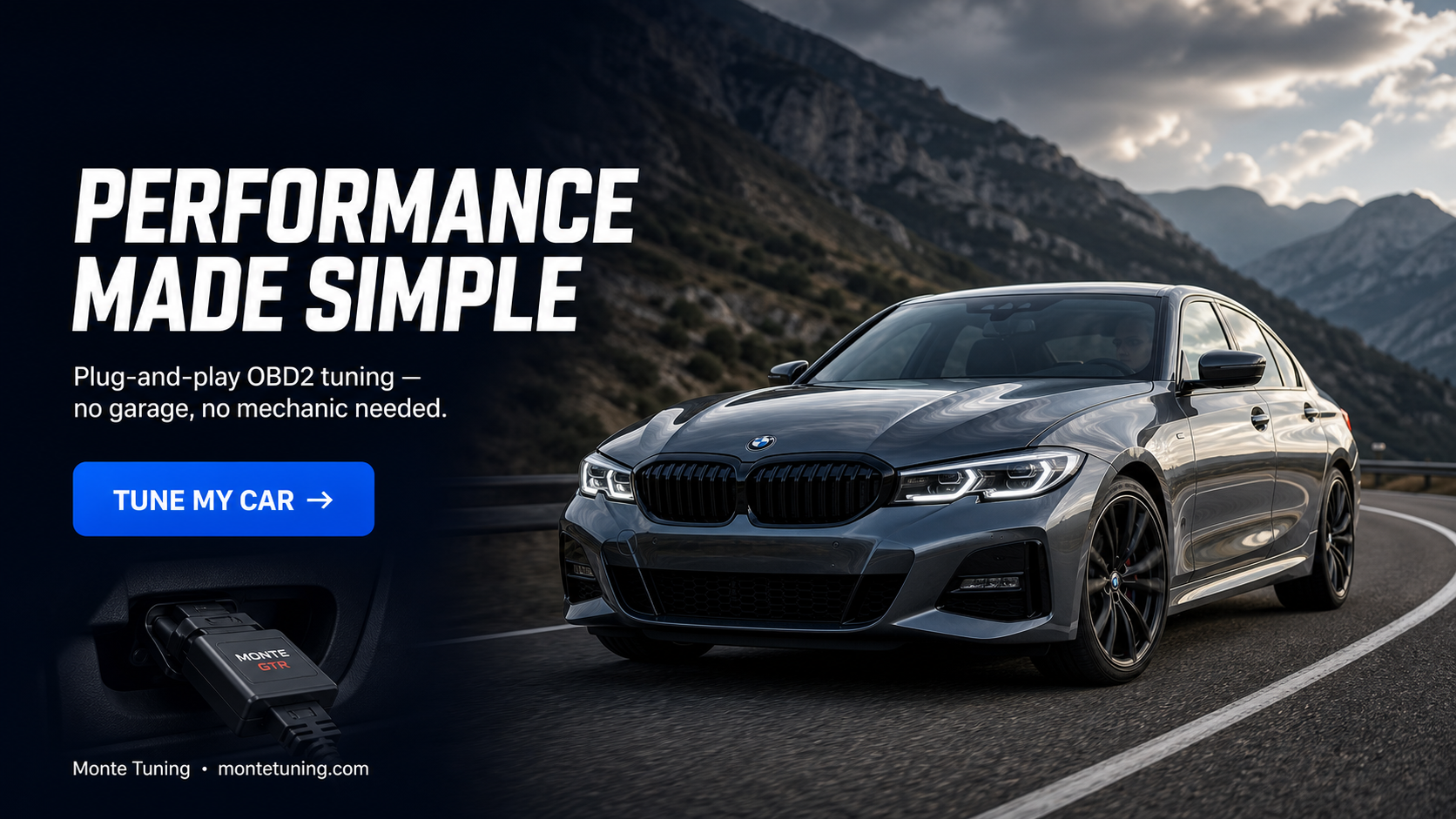
The engine control unit is effectively the brain of your car. By plugging a performance device into the OBD2 port, you aren’t replacing the ECU; you are essentially adding an intelligent layer that communicates with it. These devices, such as the Monte GT and the more advanced Monte GTR, monitor sensor inputs for air-fuel ratios, ignition timing, and boost pressure.
When you press the accelerator, the tuner requests optimized timing and fuel delivery curves. This creates a sharper throttle response and smoother power delivery. Because these devices operate externally to the factory ROM, they do not leave the permanent digital footprint that traditional bench-flashing often does. If you remove the device, the engine immediately reverts to its original factory calibration, making it an ideal approach for leased vehicles or owners who want to maintain OEM-like flexibility.
Every vehicle and engine configuration responds differently to OBD2 tuning. Before purchasing, it’s worth checking compatibility with your specific make, model, year, and engine — and reviewing the setup guide for your device.
Performance Gains and Engine Types
The reality of tuning is that results are dictated by engine architecture. Forced-induction engines—those equipped with a turbocharger or supercharger—typically see the most substantial improvements. These engines rely on managed boost pressure, which can be optimized safely to yield significant gains in both torque and horsepower. Naturally aspirated engines, while not producing the same peak gains as forced-induction counterparts, often see the most improvement in the daily driving experience, specifically through the reduction of throttle lag and a more refined torque band.
Fuel economy is another common driver for using OBD2 devices. By smoothing out the torque curve, a vehicle can often maintain higher gears longer under load, reducing the need for constant downshifting. This can result in measurable improvements in highway MPG, provided that driving habits remain consistent. It is important to remember that these systems are not repair tools; if your car has a mechanical issue, such as a dirty mass air flow sensor or worn spark plugs, these should be addressed before attempting any performance optimization.
Browse all Monte Tuning OBD2 tuners →
Installation and the Learning Cycle
One of the primary benefits of the plug-and-play approach is the removal of the need for specialized tools or technical expertise. However, patience is part of the engineering process. Once a device is installed, the car’s ECU must undergo an adaptation phase, often referred to as a drive cycle. During the first 50 to 100 miles, the engine’s short-term and long-term fuel trims adjust to the new parameters.
If you encounter rough idling or a check engine light shortly after installation, it is rarely an indication that the tuner is faulty. More often, it is an indication that the engine is responding to the new data, or it has exposed a pre-existing maintenance gap. For those needing assistance during this phase, the Monte GT setup guide and the Monte GTR setup guide provide step-by-step instructions for successful integration.
Comparing Tuning Approaches
| Feature | OBD2 Plug-and-Play | Custom ECU Flash |
|---|---|---|
| Installation | DIY (Seconds) | Professional/Bench |
| Reversibility | 100% Reversible | Difficult/Permanent |
| Warranty Impact | Minimal Risk | High Risk (Flash Counter) |
| Best For | Daily Drivers, Efficiency | Heavily Modified Track Cars |
| Cost | Affordable/Entry Level | Expensive/Labor Intensive |
Why Modern Drivers Choose OBD2 Optimization
Drivers choose to optimize their vehicles for a variety of reasons, ranging from the desire for more effortless highway passing to the need for better towing power in pickup trucks. The shift toward about Monte Tuning as a philosophy reflects a broader movement where car owners prioritize convenience and safety over invasive, permanent changes. You aren’t necessarily trying to turn a daily commuter into a race car; you are simply removing the factory-imposed constraints that make a vehicle feel dull or unresponsive.
By using shop all tuners, you gain access to technology that respects the vehicle’s safety limits while unlocking its true potential. Whether it is through the Monte GT or the Monte GTR, the goal remains the same: a more enjoyable, efficient, and personalized driving experience.
Check compatibility and explore the full lineup:
montetuning.com —
available for US, CA, UK, AU, and ES. Ships worldwide.
Frequently Asked Questions
Is OBD2 tuning safe for my engine?
Yes, when using reputable plug-and-play devices, the tuning parameters stay within the manufacturer’s safe operating limits for your specific engine, focusing on optimizing efficiency and responsiveness.
Will this void my factory warranty?
Because these devices do not perform a permanent flash of the ECU, they do not leave the “TD1” or flash counter flags that dealerships typically look for. They are easily removable before service visits.
How long does it take to see results?
While some drivers feel an immediate improvement in throttle response, the full benefits are typically realized after a 50 to 100-mile drive cycle as the ECU adapts its fuel trims to the new mapping.
Do I need a mechanic for installation?
No, these devices are designed for simple, tool-free installation. You only need to locate your vehicle’s OBD2 port and plug in the device.
How does this differ from a full ECU remap?
A full remap is a permanent software change that overwrites your factory code, often making it difficult to revert. An OBD2 tuner works externally and in real-time, providing optimization without altering the base code.