Jul 8, 2025
Throttle Controllers vs. Performance Chips: Which One Really Changes the Way You Drive?
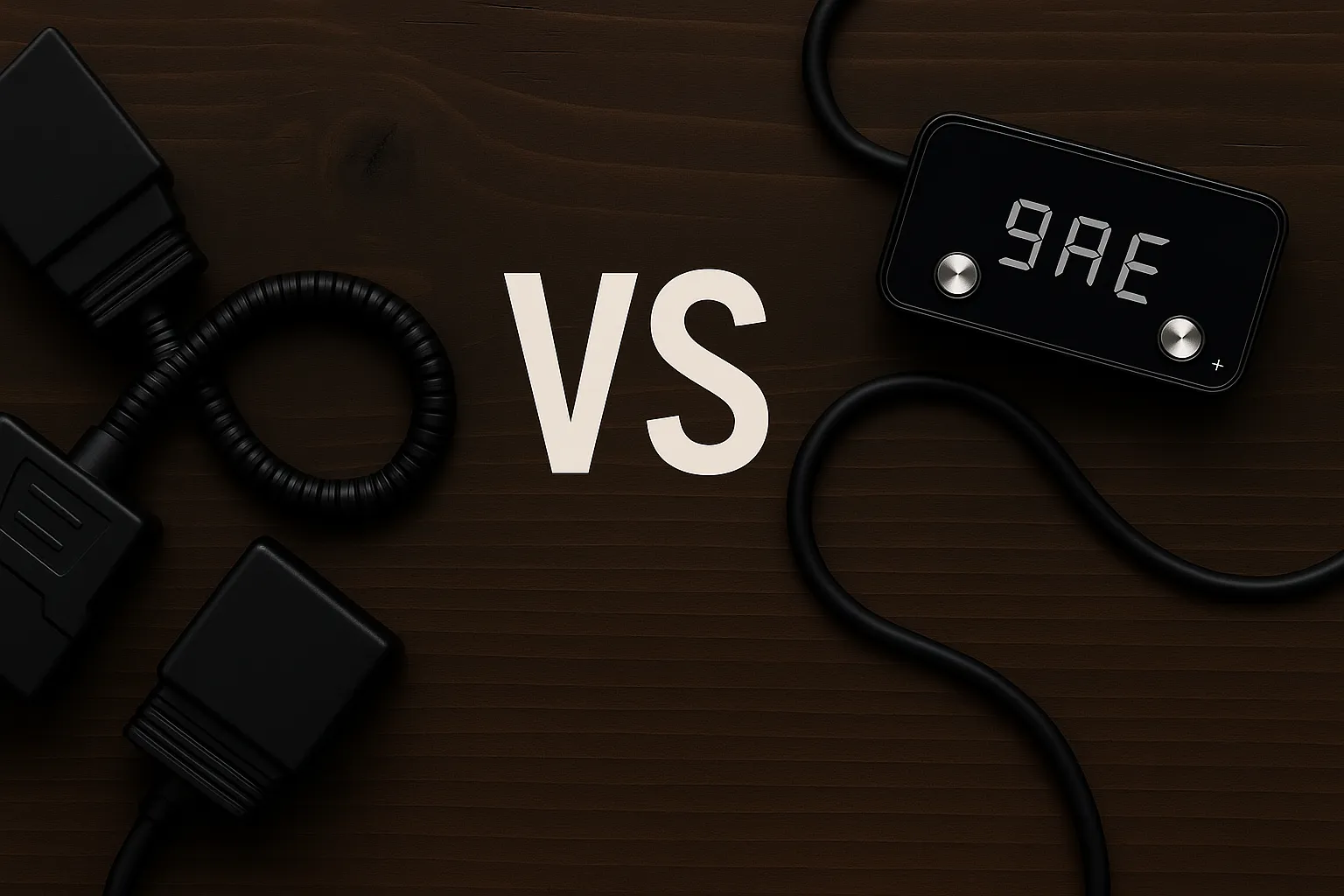
Tuning your car doesn’t have to mean popping the hood or heading to a race shop. These days, two of the easiest upgrades people talk about are throttle controllers and performance chips. You’ve probably seen both mentioned on forums or online stores, each promising to make your vehicle quicker, more responsive, or even more fuel-efficient.
But what do they actually do? Are they the same thing? Do you need both? Let’s dive into the real-world differences—and benefits—of throttle controllers vs. performance chips so you can make an informed decision.
Why Modern Cars Don’t Always Feel Responsive
If you’ve driven a car built in the last 15 years, chances are it has a "drive-by-wire" throttle system. That means your gas pedal no longer has a mechanical link to the engine. Instead, when you press the pedal, you’re sending an electrical signal to the car’s computer, which then decides how much to open the throttle.
This setup is clean, efficient, and safe—but it’s not exactly thrilling. Automakers often build in throttle lag to smooth acceleration, improve fuel economy, and meet emissions targets. So even if your engine has decent power, it might feelsluggish or delayed when you step on it.
That’s where these two devices come in.
What Is a Throttle Controller?
A throttle controller is a small electronic device that changes how your car interprets your accelerator pedal input. It doesn’t change the engine itself—it simply tells the car to respond quicker (or slower) to your foot.
For example, when you push the pedal halfway down, your car’s ECU might only open the throttle 30%. A throttle controller remaps that relationship. So now, pushing the pedal halfway might tell the engine to open the throttle 60% instead. The result? A quicker, snappier feel off the line and during mid-range acceleration.
Pros of Throttle Controllers
-
Instant improvement in throttle response
-
Great for city driving or overtaking
-
Easy to install (usually plug-and-play)
-
Adjustable modes (sport, comfort, eco)
-
Doesn’t modify engine parameters
Limitations
-
Doesn’t increase horsepower or torque
-
Mostly changes how the car feels, not how it performs
What Is a Performance Chip?
A performance chip, also known as a tuner or ECU remap module, works deeper under the hood. It connects to your vehicle’s computer and adjusts how the engine operates. Depending on the type of chip, it can modify fuel injection, ignition timing, turbo boost, throttle mapping, and more.
In other words, a performance chip doesn’t just trick the car into feeling faster—it makes it faster. The power gains vary depending on your vehicle, engine, and the quality of the chip, but many drivers report noticeable improvements in acceleration, torque, and sometimes even fuel efficiency.
Benefits of Performance Chips
-
Real horsepower and torque gains
-
Better engine response across RPM range
-
Improved towing and hill-climbing ability
-
Some offer economy modes to reduce fuel use
-
Works best on turbocharged engines
Limitations
-
Gains vary depending on the vehicle
-
Some chips require setup or calibration
-
Cheaper chips may not be reliable
Comparing the Two: What Are You Really Getting?
Let’s keep it simple:
-
A throttle controller changes how fast your car reacts to your input.
-
A performance chip changes how strong your engine reacts to demand.
Think of it like this: throttle controllers affect the communication between your foot and the engine, while performance chips affect the capability of the engine itself.
You might feel a huge difference in responsiveness with a throttle controller even if the engine’s power hasn’t changed. On the other hand, a performance chip can give you more pull on the highway or when hauling a trailer—but without the instant feel of sharper throttle input.
Installation and Ease of Use
Throttle controllers are usually as simple as plugging a small unit into the wiring harness behind your gas pedal. You don’t need tools, and you can typically switch modes (sport, eco, etc.) with a push of a button.
Performance chips, on the other hand, often connect through your OBD2 port (under the dash) or directly into the ECU. Many modern chips are plug-and-play, while others may require a smartphone app or a handheld programmer for tuning profiles.
Neither option is permanent—if you ever need to go back to stock, you can simply unplug the device.
Can You Use Both Together?
Absolutely—and a lot of drivers do.
Pairing a performance chip with a throttle controller gives you the best of both worlds:
-
Quicker throttle response from the controller
-
Real engine performance improvements from the chip
For daily driving, this combo can make your car feel smoother, faster, and more responsive without needing any internal engine modifications.
What to Watch Out For
There are plenty of quality products on the market—but also a fair share of knockoffs. Avoid overly generic chips that promise 50+ horsepower gains with no setup. These are often just resistors in a plastic box and can cause more harm than good.
Stick with brands that provide clear compatibility info, safety limits, and real-world tuning options. Read the documentation and make sure the product is designed for your specific engine type and vehicle year.
Final Thoughts
Choosing between a throttle controller and a performance chip really depends on what you're trying to improve.
If your car feels slow but isn't actually underpowered, a throttle controller might give you that sharper response you're craving. It’s quick to install, customizable, and budget-friendly.
If your vehicle genuinely needs more power—especially if it’s struggling on hills, while towing, or during highway merges—then a performance chip is the way to go. It can give your engine the tune it deserves without needing a full rebuild or aftermarket mods.
And if you want the most engaging drive possible, there’s nothing wrong with using both. Together, they transform how your car feels and how it performs—giving you a smarter, more satisfying driving experience every time you hit the road.
Do you still have any questions?
Meet Anna and Kevin. They’re here to answer your questions and help you choose the right device


Average response time: 5 minutes
